- Sustainability Champions
- Big Challenges
- Environmental
- Social
 Farming and Food Production
- The Sustainability Mindset
- What is Sustainability?
- Corporate Social Responsibility (CSR)
- Conflict-free Minerals
- One Water
- Design and Architecture
- Ecotourism and Sustainable Tourism
- Equal Rights for Women and Girls
- Sustainability in Higher Education
- Empathy and Consciousness
- Health and Wellness
- Culture and Consciousness
- Leadership Development
- Economic
- Events
- Places
- Series
- Indigenous Peoples Month
- Earthsayers INCONVERSATIONS
- Long Now Foundation
- Called From Darkness
- AI for Good
- Global Warming Teaching Circle
- Reconciling Ways of Knowing
- Sustainable Today
- Native Perspectives on Sustainability
- Peak Moment
- The Natural Way: Indigenous Voices: Speaker Series
- Sustainability Pioneers
- 24 Hours of Reality by The Climate Reality Project
- Ray Anderson Memorial Interviews
- The Ways: Great Lakes Native Culture & Language
About This Collection
Native American Heritage Month—widely recognized as Indigenous Peoples Month—is observed annually in the United States throughout November. It honors the histories, cultures, governance, and ongoing contributions of Native Americans, Alaska Natives, Native Hawaiians, and affiliated Island communities.
This is a series of short videos produced by Bob Trench for distribution on EarthSayers.org, it's Social Media Network, and through the Podcast network with the objective of bringing forward the unfiltered voices of Native Americans.
Curated by mokiethecat
 November 23, 2026 Wounded Knee is more than a name in a history book. For Mike Her Many Horses, it is a place connected to community, memory, grief, and the continuing struggle for dignity. In this video, he shares his perspective on the forces leading to the 1890 Wounded Knee Massacre and reflects on the complicated legacy of the 1973 occupation. What does it mean to live near a place whose name carries generations of grief, resistance, and unresolved history? In this episode, Mike Her Many Horses reflects on Wounded Knee, connecting the pressures that preceded the 1890 massacre with the community divisions and renewed sense of identity associated with the 1973 occupation. Mike begins with the struggle over land. He describes a world reshaped by the destruction of the buffalo, the expansion of railroads and settlement, and government demands that his people surrender more of their homeland. In his account, hunger and reduced treaty provisions were not separate from politics. They were part of the pressure surrounding agreements, allotment, and the opening of land to homesteading. His reflections emphasize what those changes meant for everyday survival. Land supported food, movement, relationships, and independence. Drought made imposed expectations of farming even harder to meet, while promises of assistance failed to provide security. Mike describes the anger and determination of people who resisted further removal and the breaking apart of their larger homeland. From there, he turns to the Ghost Dance, describing prayers, songs, and dancing rooted in a vision of restoration. He speaks of a hoped-for world with plentiful food, healthy horses, and freedom from outside domination. That spiritual hope forms the backdrop to his account of government alarm, military intervention, and Chief Big Foot’s people traveling toward Pine Ridge. |
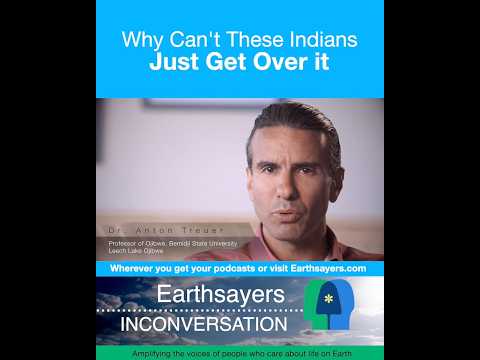
Anton Treuer & Rick McArthur discuss Why are Native peoples are told to “just get over” the past.

Watch the trailer for Dodging Bullets—Stories from Survivors of Historical Trauma. The new

The Truth About Treaty Rights

Elizabeth Warren on Federal and Tribal Relations

You’re an Eagle, Not a Chicken: Reclaiming Native Identity by Don Coyhis

Melvin Lee Houston — Where are the ancestors, and why have they not been brought home?

A Working Definition of Historical Trauma
 on Twitter
