




Showing 20 search results of 5,764 videos found for
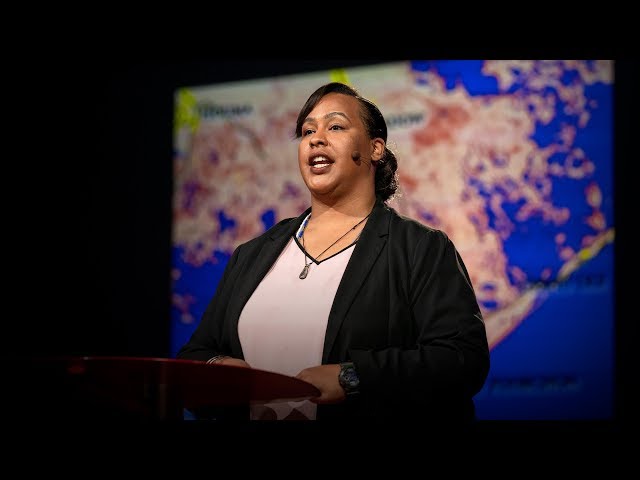
Explore TED.com for a library of TED Talks, transcripts, and translations. Leading thinkers cover technology, science, business, and global issues in 18 minutes or less, with personalized recommendations.
Disaster recovery lawyer Colette Pichon Battle, for instance, discusses the urgent crisis of climate migration. She warns of over 180 million people displaced by 2100, urging radical economic and social restructuring, collective resilience, and human rights advancement to address this global challenge.
For commercial use, submit a Media Request. Connect with TED: Twitter, Facebook, YouTube.

Named for its distinctive head shape, the cownose ray is a moderately sized stingray native to the western Atlantic Ocean. Discover more in our Marine Life Encyclopedia: http://bit.ly/38TIHs6
Join our community of Wavemakers! Subscribe to our channel and stay connected on social media: Instagram, Twitter, and Facebook. 🌊

Pacific purple sea urchins are easily identified by their distinctive color. Covered in pincers, tube feet, and purple spines, they use these ball-and-socket jointed spines for feeding and protection. Discover more in our Marine Life Encyclopedia: http://bit.ly/314vM48
Subscribe to our channel for more marine life content. Stay connected with us on social media: Instagram, Twitter, and Facebook.

Independent analyses by NASA and NOAA confirm that Earth's global surface temperatures in 2019 ranked as the second-warmest since 1880. Temperatures were 2°F (1.1°C) warmer than the late 19th century, second only to 2016.
This data continues the planet's long-term warming trend, with the five warmest years on instrumental record all occurring in the last five years. More information is available at NASA's press release.

Circular food systems are essential for a global transition towards a people, SDG, and planet-centered paradigm. This shift requires awareness, education, culture change, entrepreneurship, cooperation, and innovation, alongside crucial support for bottom-up projects from markets, the third sector, and individuals.
This session highlights the pioneering ideas and individuals shaping the future of our food systems. It will feature diverse global case studies from numerous countries across various continents, showcasing real-world initiatives.

Spending 90% of our time indoors negatively impacts health more than diet or exercise. Hexagro Urban Farming, an Italian startup, addresses this by creating a modular, nature-inspired system. Mimicking honeybee hives and tree structures, their solution transforms interior spaces into beautiful gardens, increasing access to healthy food.
Hexagro's automated indoor garden is modular, scalable, and utilizes high-pressure aeroponics, LED horticulture lighting, and environmental sensors. Join this session, streamed via Restream.io, to discover the first automated indoor garden designed to deliver abundance for everyone.

Preparing children for a sustainable future requires a collective effort from parents, teachers, and the wider community. It's not enough to simply help them understand environmental challenges; we must also take immediate action and lead by example, especially as young people like Greta Thunberg demand change.
We need to transform our own mindsets and behaviors to ensure a cleaner, greener planet for the next generation. By doing so, we empower children to become responsible stewards of our precious Earth.

Originally livestreamed via Restream.io, this session addresses the critical issue of clothing waste. Annually, New York landfills 200 million pounds of clothing. Globally, 73% of materials used for garments are landfilled or burned, with less than 1% recycled into new clothes.
To combat this, campaigns like Wear Next (New York) and Love Not Landfill (London) encourage diverting clothes from waste streams. They advocate for swapping, selling, donating, or recycling to prevent garments from ever becoming waste.
Join this session to understand why these initiatives were launched, their execution, and key learnings.

The circular economy is increasingly vital for addressing global challenges, yet the finance sector's engagement remains in early stages. While industry leaders recognize the power of circular solutions, accelerating and scaling these initiatives urgently requires capital and services from financial institutions.
This session highlights how Intesa Sanpaolo has integrated the circular economy into its core strategy. Learn how this financial services company supports businesses, especially SMEs, in making this crucial transition.

A new era of consumption is emerging, driven by increased consumer awareness of product origins and environmental impact. This shift is moving us towards innovative consumption models beyond traditional purchasing.
Within the circular economy, rental and subscription models are gaining prominence, as recycling alone has proven insufficient. The next generation will demand service-based solutions over one-time purchases, prioritizing both convenience and positive social-environmental impact.

Q'orianka, a Peruvian-American filmmaker and actress, leverages her platform to highlight human rights and environmental injustices. She focused on Los Angeles-based Occidental Petroleum, which discharged 800,000 barrels of toxic wastewater, containing contaminants like cyanide and mercury, into the Corrientes river basin in the Peruvian Amazon.
This pollution severely impacted the Achuar and other Amazonian communities, who rely on the river for survival and have endured 35 years of conflict. During a trip to Peru, Q'orianka directed media attention to their plight. She invited indigenous leaders to a red carpet event, toured affected areas, interviewed residents for a documentary, and collaborated with Amazon Watch to advocate for change.

Amira Odeh, a student at the University of Puerto Rico at Rio Piedras, observed peers buying disposable plastic water bottles due to inadequate campus fountains. Drawing from her personal experience with water scarcity, she initiated a campaign to address this wasteful habit.
Her successful advocacy led to the installation of new drinking fountains in every building and educated students on the environmental impact of single-use bottles. Consequently, more students now utilize the free tap water available on campus.
Odeh considers the university's commitment to maintaining fountain conditions and its consideration of a ban on non-reusable bottles her most significant accomplishment. This marked the first student-instigated environmental change campaign on a Puerto Rican college campus.

In 2008, fifth-grader Cassandra Lin founded Turn Grease Into Fuel (TGIF) after learning used cooking oil could be converted into affordable, clean-burning biodiesel for home heating. TGIF partners with local restaurants to collect kitchen grease, which is then recycled and distributed to charities assisting families with heating needs. This initiative has already helped offset over two million pounds of carbon dioxide emissions.
Lin and her team further championed environmental efforts by drafting Rhode Island's Used Cooking Oil Recycling Act in 2011. Passed into law in 2012, this legislation expanded TGIF's reach, establishing a robust network that effectively addresses community needs while significantly reducing waste and pollution.

Chloe Maxmin co-founded "Divest Harvard" in September 2012, aiming to move Harvard University's funds out of fossil fuel corporations. Her initiative built on research into Harvard's past divestment campaigns against apartheid and Big Tobacco, galvanizing a broad student and community movement.
The campaign gained significant traction, highlighted by a campus-wide referendum where 72% of undergraduates supported fossil fuel divestment. This, combined with outreach to alumni and faculty, led to meetings with trustees and initiated a crucial dialogue about fossil fuels at the university. Maxmin's activism began at age 12, and in 2007, she founded "First Here, Then Everywhere," an online network connecting youth activists globally.

Victor Davila, a New Yorker, was among the seven winners of the Earth Island Institute's 2011 Brower Youth Awards.
He teaches young people in his community about environmental and health issues, uniquely using skateboarding as his educational platform.
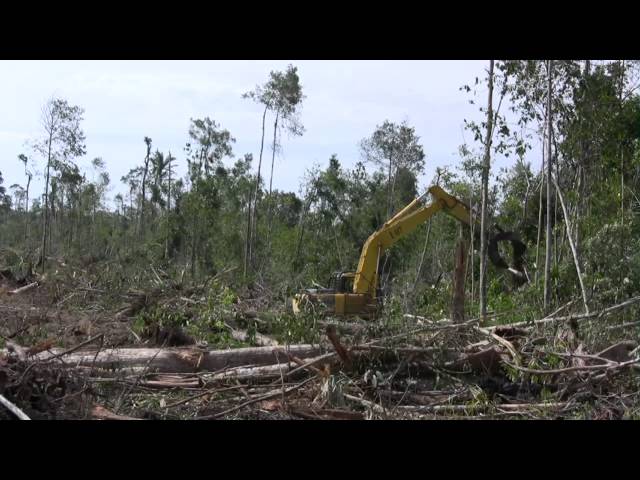
Michigan's Rhiannon Tomtishen and Madison Vorva are recipients of the Earth Island Institute's 2011 Brower Youth Award.
They successfully advocated for Girl Scouts USA to limit the use of destructive palm oil in their iconic cookies.

Childhood friends Erika and Kayla actively championed river health in their hometown. Through the Youth Tribal Council and a Salmon Run Relay, they raised awareness about the declining Klamath and Trinity rivers. Excessive water diversion for agriculture, requiring dams and heavy irrigation, had severely depleted water tables and fish populations like salmon, sturgeon, and trout.
The Salmon Run Relay, mimicking salmon migration, also educated the community on native diet and culture, featuring a ceremony based on Yurok, Hupa, and Karuk traditions. Erika and Kayla further organized town hall meetings and distributed pamphlets, aiming to unite cultures, promote health, and encourage political engagement for river conservation.

Inspired by a 2004 Wall Street Journal article on the E-Waste crisis, Alex launched Project WIN '05 with his Westerly Innovations Network team. This initiative achieved significant local impact, collecting 21,000 pounds of E-Waste and establishing a permanent town receptacle that has gathered over 60,000 pounds. Project WIN '05 also helped enact local and statewide E-Waste dumping bans.
Alex further integrated computer refurbishing into his school's curriculum, restoring and distributing 260 computers to students locally and in Sri Lanka and Mexico. His recent work includes building an Internet café in Cameroon, developing a UN Environment Program pilot for international youth, and launching a "Bridging Divides" program with U.S. businesses and schools.

Q'orianka, a Peruvian-descended filmmaker and actress, champions human rights and environmental justice. She drew attention to Occidental Petroleum's discharge of 800,000 barrels of toxic wastewater, laden with contaminants like cyanide and lead, into the Corrientes river basin in the Peruvian Amazon. This pollution severely impacts the Achuar and other indigenous communities, who rely on the river and have faced conflict for 35 years.
During a film promotion trip, Q'orianka leveraged her media presence for the Achuar's plight. She invited indigenous leaders to a red carpet event, toured affected areas, interviewed residents for a documentary, collaborated with Amazon Watch, and urged oil company representatives to visit the impacted region.

Malin Viola Wennberg asserts that a sustainable approach is essential for the future of fashion. She emphasizes that 80% of a garment's climate impact occurs before it reaches stores, underscoring the need for significant changes in the global supply chain.
As Communications Manager at Mistra Future Fashion in Stockholm, Wennberg is a dedicated Sustainable Fashion Advocate. Her academic background includes an MA in Fashion Studies and doctoral research on sustainable luxury production.
Mistra Future Fashion, a research program funded by MISTRA and hosted by RISE, drives systemic change towards a Circular Economy in fashion. It examines the entire value chain with over 50 industry partners. This talk was presented at a TEDx event; learn more at https://www.ted.com/tedx.
Environmental Scientist and Advocate
What EarthSayers stands for
Discover Diverse Voices on EarthSayers
Unlike algorithm-driven platforms that push you into a content bubble, we ensure you hear a variety of perspectives from scientists, activists, Indigenous leaders, business innovators, and everyday citizens working toward sustainability.
EarthSayers CINEMA
Watch, learn and lead—sustainability starts with you.
The Thinking Game | Full documentary | Tribeca Film Festival official selection
“The Thinking Game” is the inside story of DeepMind's groundbreaking AI research, culminating in the Nobel Prize-winning AlphaFold breakthrough. Filmed over five years by the award-winning team behind "AlphaGo," this documentary explores co-founder Demis Hassabis's lifelong pursuit of artificial general intelligence and the rigorous scientific journey from mastering strategy games to solving the 50-year-old protein folding problem.
Following its world premiere at the Tribeca Festival, "The Thinking Game" is now available to watch for free. For those interested in hosting a screening for a classroom, community, or workplace, visit: rocofilms.com/films/the-thinking-game/.


