




Showing 20 search results of 5,689 videos found for
Michigan's Rhiannon Tomtishen and Madison Vorva are recipients of the Earth Island Institute's 2011 Brower Youth Award.
They successfully advocated for Girl Scouts USA to limit the use of destructive palm oil in their iconic cookies.

Childhood friends Erika and Kayla actively championed river health in their hometown. Through the Youth Tribal Council and a Salmon Run Relay, they raised awareness about the declining Klamath and Trinity rivers. Excessive water diversion for agriculture, requiring dams and heavy irrigation, had severely depleted water tables and fish populations like salmon, sturgeon, and trout.
The Salmon Run Relay, mimicking salmon migration, also educated the community on native diet and culture, featuring a ceremony based on Yurok, Hupa, and Karuk traditions. Erika and Kayla further organized town hall meetings and distributed pamphlets, aiming to unite cultures, promote health, and encourage political engagement for river conservation.

Inspired by a 2004 Wall Street Journal article on the E-Waste crisis, Alex launched Project WIN '05 with his Westerly Innovations Network team. This initiative achieved significant local impact, collecting 21,000 pounds of E-Waste and establishing a permanent town receptacle that has gathered over 60,000 pounds. Project WIN '05 also helped enact local and statewide E-Waste dumping bans.
Alex further integrated computer refurbishing into his school's curriculum, restoring and distributing 260 computers to students locally and in Sri Lanka and Mexico. His recent work includes building an Internet café in Cameroon, developing a UN Environment Program pilot for international youth, and launching a "Bridging Divides" program with U.S. businesses and schools.

Q'orianka, a Peruvian-descended filmmaker and actress, champions human rights and environmental justice. She drew attention to Occidental Petroleum's discharge of 800,000 barrels of toxic wastewater, laden with contaminants like cyanide and lead, into the Corrientes river basin in the Peruvian Amazon. This pollution severely impacts the Achuar and other indigenous communities, who rely on the river and have faced conflict for 35 years.
During a film promotion trip, Q'orianka leveraged her media presence for the Achuar's plight. She invited indigenous leaders to a red carpet event, toured affected areas, interviewed residents for a documentary, collaborated with Amazon Watch, and urged oil company representatives to visit the impacted region.

Malin Viola Wennberg asserts that a sustainable approach is essential for the future of fashion. She emphasizes that 80% of a garment's climate impact occurs before it reaches stores, underscoring the need for significant changes in the global supply chain.
As Communications Manager at Mistra Future Fashion in Stockholm, Wennberg is a dedicated Sustainable Fashion Advocate. Her academic background includes an MA in Fashion Studies and doctoral research on sustainable luxury production.
Mistra Future Fashion, a research program funded by MISTRA and hosted by RISE, drives systemic change towards a Circular Economy in fashion. It examines the entire value chain with over 50 industry partners. This talk was presented at a TEDx event; learn more at https://www.ted.com/tedx.
Fast fashion has drastically shortened clothing lifespans, increasing consumption while ~70% of closets go unworn. Extending garment life is crucial to reduce the industry's impact, cutting new production and textile waste.
The "Switching Gear" project, supported by C&A Foundation and Circle Economy, helps four apparel brands pilot rental and recommerce business models by 2021.
Join a session with innovators from the Switching Gear Enabling Network (SGEN), a global network of over 50 circular solution providers. Discover how pioneers like The Renewal Workshop and Stuffstr are disrupting norms with rental and recommerce, exploring their latest innovations, opportunities, and challenges.

Plastic pollution poses a severe environmental threat. Plastic packaging constitutes nearly half of global plastic waste, much of it single-use. This plastic can take up to a thousand years to decompose, entering our food systems and projected to outweigh fish in oceans by 2050.
Ecoware confronts this challenge by producing 100% biodegradable and compostable packaging. Made from agricultural waste, their affordable and sustainable tableware, packaging, and medical products offer an alternative to single-use plastics.
Learn how Ecoware achieved this and if their model can be replicated in a session.

The UK's oil platforms require decommissioning. A circular economy approach offers a significant opportunity to capture economic value by reusing the vast quantities of steel, rather than simply recycling it.
While the systemic benefits of this reuse strategy are clear, aligning incentives for all stakeholders presents a key challenge. The central question is how to effectively convince every actor to prioritize reuse.
The DIF explores disruptive ideas, stories, and innovations related to the circular economy. But what exactly is the circular economy, and how does it impact you?
Join the Ellen MacArthur Foundation team for an interactive session delving into the circular economy's fundamentals and underlying value questions. Share your insights on the interactive red pen graphic before, during, and after the session.

The future of fashion and its transition to a circular economy rests with creatives across all roles, from designers to marketers and editors. Their diverse contributions are crucial in shaping this industry-wide shift.
This session explores how a new narrative can redirect customer desire from wanting more to prioritizing better, sustainable fashion. We will examine how industry creatives can apply circular principles to their storytelling, fostering a circular economy. Tune in to discover more.

Plastic offset is an emerging environmental paradigm designed to combat global plastic pollution. It aims to fund underfunded waste management social enterprises in the developing world, which offer ethical solutions but struggle to scale.
Inspired by carbon credits, plastic offset provides a transformative funding mechanism to accelerate a circular economy. Achieving meaningful impact is challenging, given the complex interplay of consumer responsibility and producer accountability, but entirely possible.
This initiative will explore local needs and global systems governing waste, from Mumbai to New York.

Former British Petroleum CEO John Browne states that BP initiated significant efforts to shift its focus towards renewable energy. These steps were designed to "change mindsets" within the company.
Browne further argues that BP was a pioneer in this transition, being one of the first oil companies to embrace a more renewable energy-centric approach.
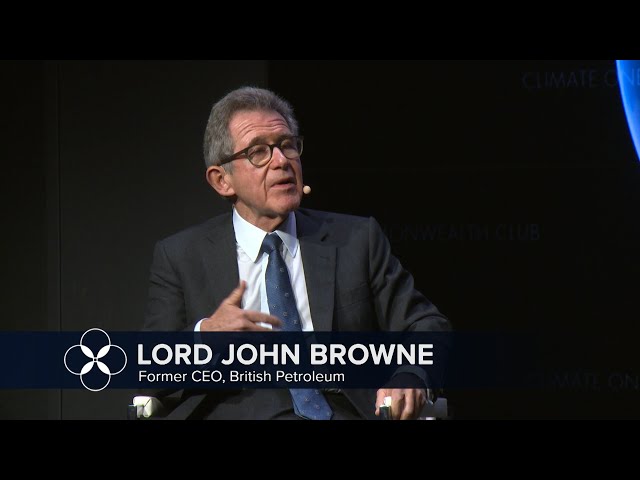
Former BP CEO John Browne agrees that current progress falls short of meeting deadlines set by the latest climate science.
He suggests that accelerating conservation efforts, particularly by replacing outdated technologies with newer ones, could help achieve these critical goals.

A Dutch company is transforming food typically fed to farmed animals into plant-based meat substitutes. Developed with Wageningen University scientists, vegetarian butcher Jaap Korteweg produces burgers, mince, and kebabs that look, feel, and taste like real meat.
This innovative method uses a fraction of the resources needed for animal farming, significantly reducing space and feed. This creative approach not only offers sustainable food alternatives but also contributes to tackling climate change and protecting our planet.
This initiative is part of the #OurPlanet collaboration with the World Economic Forum, showcasing new solutions for climate action and nature restoration. Stay tuned for more inspirational stories.

Transforming our energy infrastructure to meet greenhouse gas (GHG) reduction goals necessitates deploying electric vehicles and energy storage. However, their real-world effectiveness depends on proper grid integration and careful planning. Research by Brian Tarroja and his UC Irvine colleagues identifies these critical integration needs and life cycle planning considerations to ensure the full GHG benefits of these technologies are realized in future electricity systems.
This program is from the Institute for Energy Efficiency, presented by UCTV. As the University of California's broadcast and online media platform, UCTV offers in-depth programming from its campuses and research institutions, exploring a broad spectrum of subjects for a global audience, embodying UC's core missions of teaching, research, and public service. Visit UCTV for more.
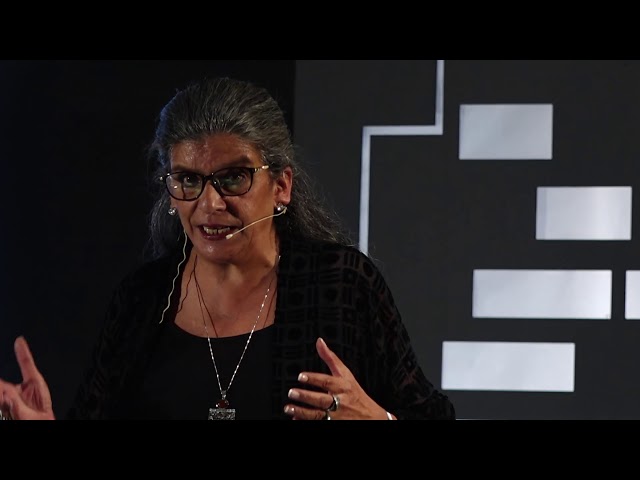
Naheed Mooraj, an educationist, founded The Bee's Knees, an initiative offering organic food wraps as an alternative to single-use plastic. This venture reflects her commitment to environmental sustainability.
With over 18 years in education, including establishing a school for underprivileged children, Naheed shifted her focus to creating practical solutions for a cleaner planet. Born and raised in Pakistan, she is passionate about fostering a sustainable future for her country. This talk was delivered at a TEDx event. Learn more at https://www.ted.com/tedx.

The Fried Egg Jellyfish, also known as Egg-Yolk Jellies, earns its name from its distinctive appearance. Its translucent bell features an elevated yolk-yellow center, resembling a cracked egg floating in water. Discover more in our [Marine Life Encyclopedia](http://bit.ly/32JnAp9).
Join our community of Wavemakers by subscribing to our channel. Stay connected with us on [Instagram](https://www.instagram.com/oceana/), [Twitter](http://twitter.com/oceana), and [Facebook](https://www.facebook.com/oceana/).

Less than 1% of clothing is recycled, leading to a truckload of textile waste entering landfills every second. However, some designers and brands are challenging this linear "take-make-waste" model by embracing sustainable practices.
A prime example is Rapanui, founded by two brothers on the Isle of Wight. They create clothing from natural materials using renewable energy, designing products for circularity. Worn-out items are recovered to make new ones, and t-shirts are produced on-demand to eliminate overproduction. Rapanui also provides a free platform for global access to their supply chain and technology.
Discover more about their ambitious journey to redesign the fashion industry. Multistreaming with Restream.io.

The built environment consumes half the world's materials, with global construction projected to add Paris-sized floor space weekly by 2060. This necessitates the industry's urgent adoption of circular principles on a large scale.
This session, livestreamed via Restream.io and featuring experts from Arup and GXN Innovation, will explore how to implement these principles and present a compelling business case to drive industry action.
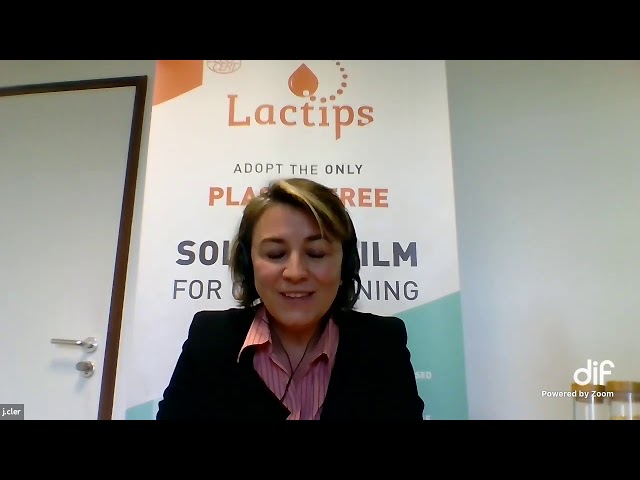
Five years ago, Lactips pioneered the world's first environmentally friendly plastic, crafted from industrial casein and natural additives. This 100% biosourced, biodegradable material boasts specialty plastic properties, including gas barrier, water solubility, and edibility.
Its unique, patented technology offers a significant opportunity to transform non-biodegradable flexible packaging and substitute single-use plastics in detergency, food, and building applications.
Explore Lactips' journey, scalability, and challenges with founder Marie-Hélène Gramatikoff. Watch the session here.
Environmental Scientist and Advocate
What EarthSayers stands for
Discover Diverse Voices on EarthSayers
Unlike algorithm-driven platforms that push you into a content bubble, we ensure you hear a variety of perspectives from scientists, activists, Indigenous leaders, business innovators, and everyday citizens working toward sustainability.
EarthSayers CINEMA
Watch, learn and lead—sustainability starts with you.
The Thinking Game | Full documentary | Tribeca Film Festival official selection
“The Thinking Game” is the inside story of DeepMind's groundbreaking AI research, culminating in the Nobel Prize-winning AlphaFold breakthrough. Filmed over five years by the award-winning team behind "AlphaGo," this documentary explores co-founder Demis Hassabis's lifelong pursuit of artificial general intelligence and the rigorous scientific journey from mastering strategy games to solving the 50-year-old protein folding problem.
Following its world premiere at the Tribeca Festival, "The Thinking Game" is now available to watch for free. For those interested in hosting a screening for a classroom, community, or workplace, visit: rocofilms.com/films/the-thinking-game/.


