




Showing 20 search results of 5,764 videos found for

In an age where governments and businesses hold vast amounts of our data, protecting privacy and ensuring democratic information use is paramount. Cities, home to over half the global population and centers of innovation, are crucial for developing new technologies and business models.
However, truly "smart cities" depend on "smart citizens." This requires guaranteeing access to opportunities that develop critical skills for interacting with new technologies.
Join Mara Balestrini, CEO of Ideas for Change, to explore how citizens can harness their city's data to address local problems.

Woody Chan argues that climate change is solvable, despite feelings of helplessness. Drawing from his experience at China Water Risk, which evolved into a leading think tank in seven years, he shares how he overcame similar despair.
Chan proposes innovative solutions, from 3D printing steaks and capturing cow farts to slowing fashion. A Cambridge Geography graduate (2016) concerned with wastewater discharge, he joined China Water Risk, an NGO providing ecological and financial consultancy.
Currently, Chan aims to tackle water and climate risks from a business and financial perspective. This talk was given at a TEDx event. Learn more at https://www.ted.com/tedx.
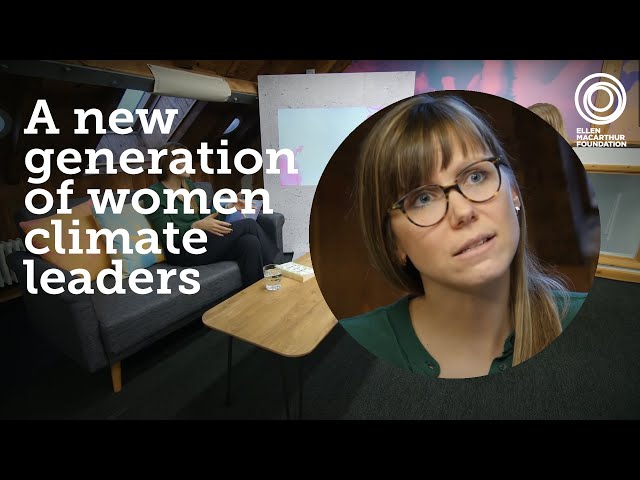
C40's Women4Climate initiative empowers women to lead climate action. Through a global mentorship program and leadership events in C40 cities, it aims to foster new thinking and momentum among future leaders.
Women, who comprise over half the world's population, are often disproportionately impacted by climate change but lack representation in decision-making. Enhancing their participation and leadership is crucial for a healthy, prosperous, and sustainable future for all.
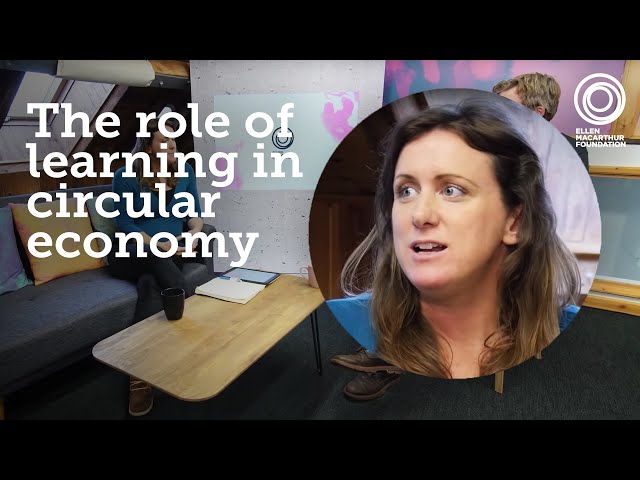
Our thinking, shaped by learning, influences the world. Adopting a circular economy demands a learning journey, new practices, and a significant mindset shift.
The Ellen MacArthur Foundation supports this transition. Our Learning Team works across schools, universities, businesses, and informal settings to foster new mindsets. Tune in to learn more about our work and its impact.

Human population and demands are rapidly growing, straining our finite resources. By 2050, feeding 10 billion people will require more land, farmers, and energy. The critical challenge is achieving this while regenerating our already degraded planet.
Discover how regenerative agroforestry offers a vital solution. This agricultural system mimics nature, preserving forests, mitigating climate change, and restoring planetary health.
Join Felipe Villela, founder of reNature, and Patrick Worms from the World Agroforestry Centre, to learn more.

Forest Gardens offer an abundant, beautiful, and climate-resistant way to grow food sustainably. This ancient knowledge, revived for modern use, requires no digging, unnatural additions, or extensive weeding and watering. Primarily perennial, these gardens eliminate the need for annual seeding, providing continuous produce with minimal effort.
The National Forest Gardening Scheme promotes harmony and well-being through planting and enjoying these unique gardens. To make them accessible, the scheme is launching a "Forest Garden in a Box." This initiative is designed for a wide range of settings, including individual gardeners, window boxes, schools, community gardens, and public parks.

While bio-based materials are crucial for transitioning to a circular economy, their role in fully replacing fossil fuels and curbing emissions isn't a simple solution. Many companies are investing in bio-based supply chains for everyday products like fuel, fiber, chemicals, and plastics.
However, producing biomass often demands significant land and nutrient resources, highlighting the complexities and challenges involved in their widespread adoption.

The circular economy is crucial for tackling climate change, as 45% of global greenhouse gas emissions stem from how we make and use products and produce food.
Per Klevnäs, a managing consultant and economist at Material Economics, brings extensive experience from over 100 international energy, resource, and climate projects since the early 2000s. He advises companies on resource and sustainability strategies, covering investment, low-carbon growth, and regulatory planning.

The fashion and textile industry significantly impacts the environment, contributing 10% of global greenhouse gas emissions. Producing polyester consumes 70 million barrels of oil annually and takes centuries to decompose. Cotton also demands vast resources, using 20,000 liters of water per kilogram, alongside significant land and pesticides.
Discover how to create clothes that can be made again. This session will reveal technological solutions from Aalto University and feature Petar Ostojic, founder of the Latin American Innovation Centre for the Circular Economy (CIEC). He will explain how combining the circular economy and the Fourth Industrial Revolution can address waste, improve living standards, and tackle other challenges across Latin America.

Nature offers elegant solutions to countless design challenges, from advanced adhesives and biodegradable packaging to incredibly strong materials and the mechanics of flight. The study and application of these natural innovations is known as biomimicry.
Join us to hear from two experts in this field. Richard MacCowan of Biomimicry UK will discuss its role in adopting Industry 4.0 technology, while Veronika Kapsali from University of Arts London will share insights on biomimicry in her textiles work.

Digital technology is essential for transitioning to a circular economy. Data and artificial intelligence, in particular, are critical components in this global shift.
This session will explore how these and other digital technologies can be leveraged to accelerate the move towards circularity.

Filmed at the new border wall construction within Arizona's Organ Pipe Cactus National Monument, this poem addresses the complex struggles unfolding along the border.
It powerfully conveys the challenges faced by migrants seeking refuge, the fragmentation of wildlife populations and ecosystems, and the militarization impacting indigenous communities.

The transition to a circular economy offers an exciting opportunity to redesign roles and create new jobs. However, critical questions remain: How can we ensure these circular jobs are high-quality, inclusive for both high and low-skilled workers, and genuinely better than those in linear sectors? This systemic shift requires careful consideration of public and private sector roles in fostering an equitable labor market.
Circle Economy is dedicated to securing a positive transition for work and workers. Join us as Circle Economy moderates a discussion with experts and the DIF audience to explore these vital questions and more.
Petar Ostojic highlights the crucial link between the circular economy and the Fourth Industrial Revolution (4IR). The Latin American Innovation Centre for the Circular Economy (CIEC) explores how these two megatrends can unite to foster a new era of prosperity in Latin America.
In this session, CIEC founder Petar Ostojic will explain how this powerful combination can tackle critical challenges like waste and elevate living standards for the region's population, projected to increase by 17% by 2030.
Multistreaming with Restream.io.

Waste and pollution are not accidents but consequences of design choices. By viewing waste as a design flaw, we can prevent its creation from the outset.
Our linear economy relies on non-renewable petroleum, making a circular system impossible. Plants, the origin of petroleum, offer a naturally abundant and renewable alternative.
Historically, converting complex plant material into petroleum-like molecules was challenging. However, researchers at EPFL in Switzerland have developed a method to fully valorize and utilize plants as a petroleum substitute.

Join our session, multistreaming with Restream.io, to explore AgriProtein's innovative solutions. Our current food production system is highly wasteful, environmentally damaging, and unhealthy. This challenge will intensify, as more food will be needed in the next 50 years than in the previous 10,000.
AgriProtein, a South African company, tackles two principal food system challenges. They harness billions of "winged helpers" (insects) to convert vast amounts of organic waste into sustainable animal feed. Discover how they achieve this groundbreaking solution by tuning into this session.

This 2019 Bioneers Conference keynote, introduced by David Cobb of Cooperation Humboldt, addresses urgent global threats. Brandon King, a Founding Member of Jackson, Mississippi’s Cooperation Jackson, presents an inspiring model for integrated solutions. His organization, a network of worker cooperatives, is building a regenerative economy and participatory democracy through a Just Transition Plan, demonstrating how to create a just and sustainable future.
Since 1990, Bioneers has been a fertile hub for innovators offering practical solutions to the world's most pressing environmental and social challenges.
Explore more talks, articles, and podcasts at bioneers.org. Subscribe to the Bioneers Radio Series. Support our work at bioneers.org/donate, join our mailing list, and connect on Facebook, Twitter, and Instagram.
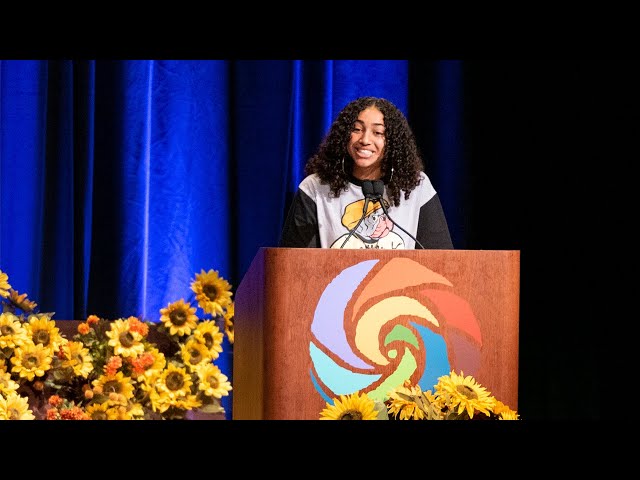
Isha Clarke's 2019 Bioneers keynote stressed building a global climate movement by prioritizing those most impacted by environmental injustice. She highlighted the climate crisis's roots in racism, white supremacy, and greed, advocating for genuine intersectionality rather than tokenization. Learn more about Isha Clarke.
Since 1990, Bioneers has served as a fertile hub for social and scientific innovators offering practical, visionary solutions to pressing environmental and social challenges.
Find more talks, engaging articles, interviews, podcasts, and ways to take action by visiting Bioneers.org.
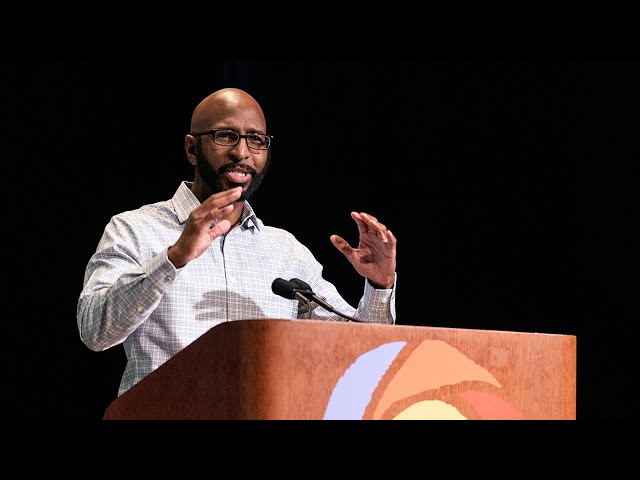
This 2019 Bioneers Conference keynote features Demond Drummer, co-founder and Executive Director of New Consensus. As an intellectual architect of the Green New Deal, Drummer's organization provides policy proposals to leaders like Congresswoman Alexandria Ocasio-Cortez. He draws on historical movements, from FDR's WWII mobilization to the Civil Rights Movement, to frame the Green New Deal as a vital next chapter for America.
Since 1990, Bioneers has been a fertile hub for innovators addressing global environmental and social challenges. Discover more talks, articles, and podcasts at [bioneers.org](http://bioneers.org). Support their mission at [bioneers.org/donate](https://bioneers.org/donate), join their [mailing list](http://www.bioneers.org/subscribe), or connect on [Facebook](https://www.facebook.com/Bioneers.org), [Twitter](https://twitter.com/bioneers), and [Instagram](https://www.instagram.com/bioneers/).

This video essay examines the contentious nature of oil and gas pipelines, including Keystone XL and Dakota Access. It highlights how new pipeline construction risks locking us into decades of fossil fuel reliance.
Support future videos via Patreon, Twitter, and Facebook. Further resources cover pipeline safety, the Keystone XL timeline, renewable energy goals, and a Keystone XL explanation.
Environmental Scientist and Advocate
What EarthSayers stands for
Discover Diverse Voices on EarthSayers
Unlike algorithm-driven platforms that push you into a content bubble, we ensure you hear a variety of perspectives from scientists, activists, Indigenous leaders, business innovators, and everyday citizens working toward sustainability.
EarthSayers CINEMA
Watch, learn and lead—sustainability starts with you.
The Thinking Game | Full documentary | Tribeca Film Festival official selection
“The Thinking Game” is the inside story of DeepMind's groundbreaking AI research, culminating in the Nobel Prize-winning AlphaFold breakthrough. Filmed over five years by the award-winning team behind "AlphaGo," this documentary explores co-founder Demis Hassabis's lifelong pursuit of artificial general intelligence and the rigorous scientific journey from mastering strategy games to solving the 50-year-old protein folding problem.
Following its world premiere at the Tribeca Festival, "The Thinking Game" is now available to watch for free. For those interested in hosting a screening for a classroom, community, or workplace, visit: rocofilms.com/films/the-thinking-game/.


