




Special Collections:
Innovation and Sustainability


Doreen Orishaba, who helped build Africa's first electric car in 2011, now operates electric buses across Kenya and Rwanda, moving thousands daily on zero-exhaust vehicles. In her TED Countdown Summit 2025 talk (recorded June 18, 2025), she explains how to scale clean transport and why electric vehicles are closer than you think. Watch her talk: https://go.ted.com/doreenorishaba
Join TED in person at a conference: https://tedtalks.social/events. Become a member to support their mission: https://ted.com/membership. Subscribe to newsletters: https://ted.com/newsletters. Explore more talks on Technology, Entertainment, Design, and global issues at https://TED.com, or follow TED on social media.

Subscribe to Patagonia updates here. Explore more from Patagonia on their official site, Stories, Instagram, Facebook, TikTok, and LinkedIn.
Patagonia, Inc., founded by Yvon Chouinard in 1973 and based in Ventura, California, is a global retailer of outdoor recreation clothing, equipment, and food. It operates stores in over ten countries and factories in sixteen. We recommend Yvon Chouinard's speech, "Reflections of a Green Business Pioneer."

Premiered November 1, 2022, this discussion explores Artificial Intelligence (AI) in education. AI, defined as computer systems performing human-like tasks such as visual perception and speech recognition, is transforming education. It improves quality and access to knowledge, optimizing learning patterns and automating tasks for students and teachers.
In this AI for Good Perspectives event, Professor Mérouane Debbah, Chief Researcher at TII's AI and Digital Science Research Center, details how data and AI revolutionize education. He also addresses shaping national policies to advance equal learning, a core UN Sustainable Development Goal. Debbah is also a professor at CentraleSupélec and Mohamed bin Zayed University of Artificial Intelligence.

Prof. Shannon Vallor, Baillie Gifford Chair in AI Ethics, explores whether machines can possess virtue for harmonious human-AI coexistence. She examines virtue's meaning for AI, its link to trustworthiness, and the role of value alignment, concluding with ethical and design challenges.
The course "All Things Have Standing," from Carnegie Council and Fighter Steel Education, draws inspiration from the "Spark Hunter" audio drama's idea that all things have ethical standing. It explores AI and environmental ethics, their psychology, philosophy, and global challenges.
For more on "All Things Have Standing" and to listen to "Spark Hunter," visit FighterSteel.com. Listen to the course wherever you get podcasts by subscribing to Carnegie Council.

New_ Public invites thinkers, builders, designers, and technologists to collaborate on creating better digital public spaces.
This platform combines a newsletter, magazine, and community, all supported by the Civic Signals team.

Join Dr. Tim Chapin, Dean of Social Sciences and Public Policy at Florida State University, for a thought-provoking discussion on July 16, 2019, in Annapolis. This Reimagining City Dock Speaker Series event will explore how historic communities can integrate autonomous vehicles and shared mobility into their transportation systems and built environment.
Learn together what the arrival of driverless cars means for Annapolis. This engaging evening is sponsored by the City of Annapolis, Historic Annapolis, Maryland Hall, Severn Savings Bank, and the Downtown Annapolis Partnership. For more details, visit the City Dock Speaker Series page.

Karl-Henrik Robért, founder of The Natural Step, discusses a sustainable future in relation to innovation.
He explores key questions: What does a sustainable future entail? Are we losing paradise? How do innovation and creativity connect with sustainability? (2015)

California State Senate President pro Tempore Kevin de León discussed the future democratization of electric vehicle (EV) infrastructure. He highlighted a significant transformation of the electric infrastructure system.
De León emphasized a historic shift, stating that "For the first time in the history of the United States of America, energy companies...will be competing for the same market share with the fossil fuel industry." This marks a new era of competition in the energy sector.

We must reimagine Earth's organization. The future is driven by mega-cities and connectivity, not countries and borders, where the most connected powers and people will thrive.
Leading strategist Parag Khanna explains how the global connectivity revolution—across transport, infrastructure, and communications—has upended the 'geography is destiny' mantra. He asserts that connectivity, not sovereignty, is the organizing principle of 21st-century society.
Explore the Connectivity Atlas.

Professor Beth Simone Noveck, renowned for her work with Obama's Open Government Initiative, visited the RSA on February 18, 2016. She outlined a profound new vision of democracy, rooted in the collective knowledge and expertise of everyday people.
Connect with the RSA: Twitter, Facebook, SoundCloud, and Instagram.

Published by McKinsey & Company on January 17, 2016, this article explores how technology-driven trends will revolutionize industry responses to evolving consumer behavior, partnership development, and transformational change.
For more details on these disruptive trends, particularly within the auto industry, visit the full report here.

Jonathon Porritt, an eminent writer, broadcaster, and commentator on sustainable development, presented "Sustainability for All" at TEDxExeter (June 7, 2013). Learn more at his website: jonathonporritt.com.
He is the Co-Founder of Forum for the Future, the UK's leading sustainable development charity. Porritt also served as Co-Director of The Prince of Wales's Business and Sustainability Programme, Director of Friends of the Earth (1984-90), and co-chair of the Green Party (1980-83).
In 2009, he concluded nine years as Chair of the UK Sustainable Development Commission, providing high-level advice to Government Ministers.

Carlo Ratti, founder of Carlo Ratti Associati and director of MIT's Sensible City Laboratory, envisions the future of a driverless city.
This concept was published on February 9, 2015.

Globally, science is deemed critical and receives investment, yet scientists face significant funding challenges, exemplified by issues like the sequester. This creates tension between the scientific enterprise and public attitudes.
Alan Leshner, CEO of the American Association for the Advancement of Science (AAAS) and Executive Publisher of *Science*, offers insights. He discusses the state of science, public perception, and strategies for scientists to improve public communication.

On February 22, 2013, the Yale Center for Business and the Environment hosted a panel discussion titled "Geotechnology and the Future of Sustainability." This event brought together Yale researchers and Google Developers.
The discussion explored geotechnology's emergence as a tool for addressing global problems. Speakers included Rebecca Moore (Google) and Yale Professors Walter Jetz, Karen Seto, and Dana Tomlin.

Joel Makower delivered the keynote address at the Partners in Project Green Annual General Meeting on June 6, 2013. He offered insights on how companies—and their customers and stakeholders—are integrating sustainability into their business agendas. Sustainability has evolved from "doing good" to addressing risk, building resilience, and fostering innovation.
The meeting also celebrated the 2012 successes of businesses in the Pearson Eco-Business Zone and unveiled Partners in Project Green's new strategic direction. Simultaneously, a convergence of technologies is enabling companies to accelerate efficiencies and create new products and services.
For further insights, order Joel Makower's latest book from Amazon.com or visit your local bookstore. This text was published on September 4, 2013.
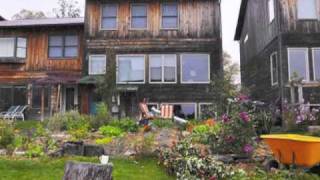
Karen Litfin is the author of "Ecovillages: Lessons for Sustainable Community." Learn more about the book and its themes at the official website.
Ecovillages worldwide exemplify sustainability by integrating social, economic, and environmental aspects into community life. Discover these communities through Litfin's extensive research and journey.
The book is available for purchase on Amazon or at your local bookstore.

Stephen Watson and Isabel Hoffmann present a video showcasing TellSpec's significant progress. They detail advancements made in just three months since its Indiegogo crowd-funding campaign began in October 2013.
The presentation highlights improvements in the scanner and app's size, usability, portability, user interface, and input capabilities. This video was published on December 31, 2013.

By 2050, 70% of the global population is projected to live in cities. To address the immense challenges this presents for water, waste, and energy, Veolia Environnement has partnered with LSE Cities. Their collaboration aims to visualize these issues and develop future-proofed solutions.
The vision for the 2050 city is one built on sustainability and the circular economy. Future homes are imagined with innovations like nanobots for waste sorting, self-cleaning bathrooms, and ultrasonic baths.
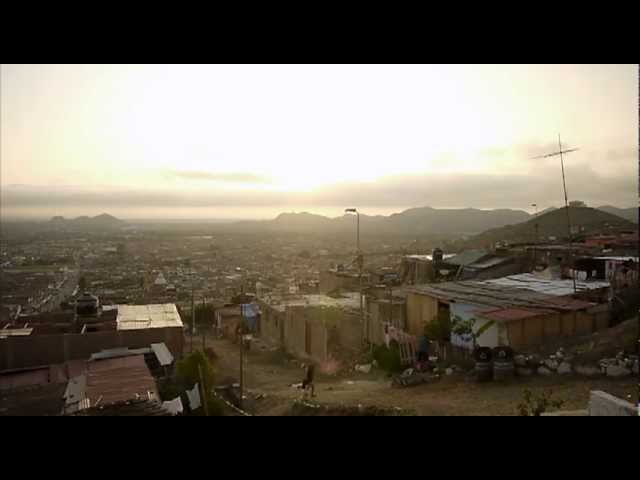
Published on February 19, 2013, this project introduces the world's first billboard capable of producing potable water directly from the air.
This innovative solution was developed by Mayo DraftFCB for The University of Engineering and Technology (UTEC) in Peru, showcasing a remarkable advancement in sustainable technology.
- 1
- 2
Environmental Scientist and Advocate
What EarthSayers stands for
Discover Diverse Voices on EarthSayers
Unlike algorithm-driven platforms that push you into a content bubble, we ensure you hear a variety of perspectives from scientists, activists, Indigenous leaders, business innovators, and everyday citizens working toward sustainability.
EarthSayers CINEMA
Watch, learn and lead—sustainability starts with you.
How to Live on Earth | Feature Documentary | Presented by Benedict Cumberbatch
What if the solutions to building a better future already exist? How to Live on Earth is an ambitious documentary that explores how humanity can create a thriving future by collaborating with nature. Presented by Benedict Cumberbatch, the film reveals the potential of teaming up with nature to address our greatest challenges.
Heartwarming and energizing, it offers a hopeful vision for a future where both nature and humanity can thrive. How to Live on Earth is produced by Open Planet Studios in association with Villars Institute Foundation and Silvania. Join the conversation by downloading film assets and sharing your reaction at howtoliveonearth.net/social-toolkit. Explore educational resources from the Villars Institute at YouTube.


