




Special Collections:
High Risk Energy Sources


On July 7, 2017, 122 countries voted for the Treaty on the Prohibition of Nuclear Weapons (TPNW), a historic ban that proceeded despite nuclear powers abstaining. This marked a significant shift, driven by non-nuclear states living under the threat of these weapons.
This 56-minute documentary explores the journey to establish the TPNW, highlighting the International Campaign to Abolish Nuclear Weapons (ICAN) and the humanitarian initiative. Through the voices of leading activists, it traces the history of nuclear weapons and anti-nuclear efforts, detailing steps taken since 2010 to make the treaty a reality. The film also empowers viewers, showing how individuals can help bring the treaty into force and stigmatize nuclear weapons until their eradication.

Peace Action New York State (PANYS) hosted a screening of the inspiring new film, "The Beginning of the End of Nuclear Weapons." The event featured a discussion led by Alice Slater of World Beyond War, who is prominently featured in the film.
Slater is also a UN NGO Representative for the Nuclear Age Peace Foundation, a member of the Global Council of Abolition 2000, and works with the International Campaign to Abolish Nuclear Weapons (ICAN). A video of this August 1, 2019 event was captured by Joe Friendly.
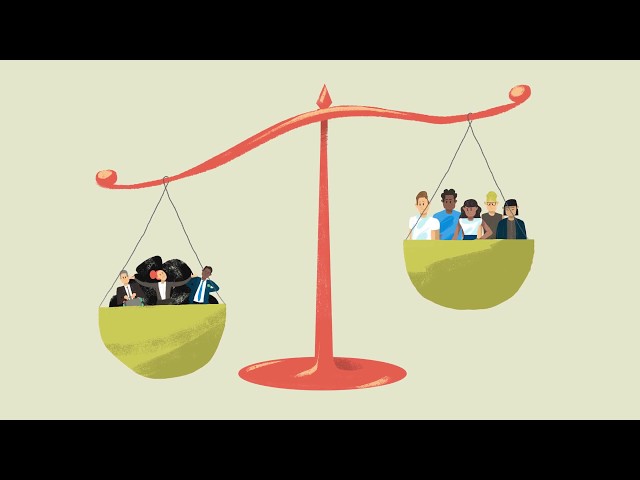
The future doesn't belong to coal; it belongs to us. Watch our new video, voiced by Australian film and television legend Sigrid Thornton, for CEO David Ritter's new book: "The Coal Truth."
This timely book offers a vital contribution to the national struggle over the coal industry's future. It addresses the fight to stop Adani, defeat big polluters, and reclaim our democracy, featuring insights from diverse contributors.
Grab your copy of the book here: https://bit.ly/2qIpoxE
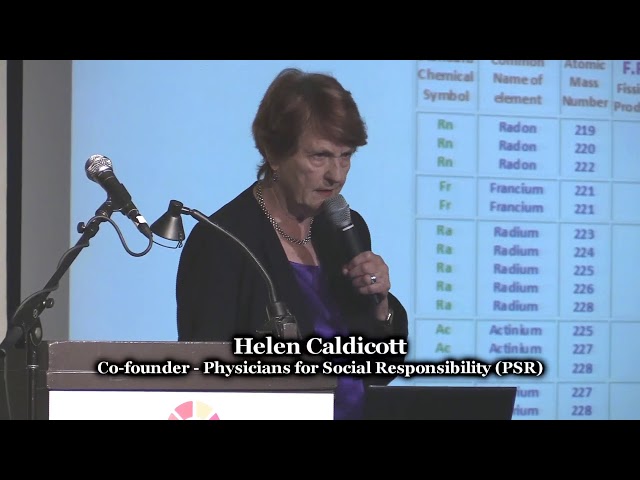
Helen Caldicott, co-founder of Physicians for Social Responsibility (PSR), emphasized the dangers of living near nuclear power plants, particularly for young children. She stated, "It's dangerous to live anywhere near a nuclear power plant - especially children under five years old (within 2 miles)."
This warning was part of her presentation, "Fukushima's Ongoing Impact," recorded on September 28, 2014, at Town Hall Seattle. For more information, visit her website: Helen Caldicott.

This interview features Tom Carpenter, Executive Director of the Hanford Challenge.
The discussion covers developments at the Hanford Nuclear Reservation throughout 2016.

Indigenous leaders, directly affected by the Ecuador and Andes Petroleum contract, held a January 28 press conference in Quito. They declared the government's consultation process illegal and illegitimate, rejecting oil exploration in blocks 79 and 83, and further development in the South-Central region. More details are available on the Pachamama website and their YouTube channel.
Manari Shigua of the Sápara people testified that UNESCO's designation of Sápara culture as "Oral heritage of humanity" implies all resources in their territory are world heritage. He asserted the Ecuadorian government must consult the world before exploiting these resources, especially those opposed by the people.

Despite China's pledge to cap and reduce carbon emissions, coal production continues to grow. This creates difficult choices for those who work in and live near the mines.
Published by the New York Times on November 4, 2015, this content is available on their YouTube Channel.

The Tar Sands Resistance March on June 6, 2015, brought over 5,000 people to St. Paul, MN, marking the region's largest anti-tar sands demonstration. The march delivered a unified message: keep toxic tar sands out of America's Heartland to protect water, climate, and communities.
Produced by MN350, the event featured cinematography and editing by Xiaolu Wang, Nels Shafer, and Will Hanson. Music was provided by Podington Bear and "Submerging Green," alongside the Hoka Hey Drum Group. Key speakers included Tom Goldtooth, Winona LaDuke, Rep. Keith Ellison, Chris Wahmhoff, and Akilah Sanders-Reed.

This video observes traffic on Portland, Oregon's Steel Bridge, raising questions about crude oil transport in urban areas. It urges citizens to challenge leaders on the risks of such movements. Produced by Ruth Ann Barrett for her PDXDowntowner YouTube Channel, published April 2, 2015.
For additional context, The New York Times documentary, 'A Danger on the Rails,' addresses similar issues in Albany, New York. This piece is part of the EarthSayers.tv 'High Risk Energy Alternatives' collection, available here. Published April 22, 2015.

"A Danger on the Rails," an Op-Doc from The New York Times, is a short documentary highlighting the risks of trains transporting explosive oil across North America.
Released on April 22, 2015, the film features Paul Gallay of Riverkeeper and was produced by Jon Bowermaster.
Read the accompanying New York Times story here.

In 2011, Amazon Watch received a mysterious package from a Chevron whistleblower. Chevron, which acquired Texaco in 2001, had recently been found guilty of one of the worst environmental disasters in Ecuador's Rainforest.
The package contained video tapes showing Chevron consultants unsuccessfully attempting to locate uncontaminated soil and water.
Ver en español aquí: https://youtu.be/8VKX2yD2slM

Fracking for oil and natural gas is transforming America's energy economy. The resulting low-priced natural gas has undercut nuclear, coal, and renewable power. This boom is spreading globally, with the U.S. poised to become the world's largest petroleum producer, potentially undermining OPEC and altering geopolitical power.
Russell Gold's book, *The Boom: How Fracking Ignited the American Energy Revolution and Changed the World*, details how Texas and Oklahoma innovators perfected hydraulic fracturing. In this video, Gold, a Wall Street Journal reporter, provides a brief history of fracking's origins and its industry evolution. Published in 2015, his book is available for order.

Explore the 1989 Exxon Valdez oil spill and its long-term impact. This video examines lessons learned two decades later and how preparedness for future environmental disasters has improved.
Uploaded on August 29, 2011, by NOAAOceanMediaCenter.

A 25-acre sinkhole has formed in Bayou Corne, Louisiana, an industrial area known as "Cancer Alley." As earth collapses, toxic pollutants are released, rendering the area unsafe for residents. This report, published January 7, 2014, documents disappearing trees and the community's struggle.
Produced by Ben Depp and Executive Producer Storyhunter, this piece highlights critical environmental issues. Storyhunter empowers video journalists and documentary filmmakers to create impactful stories.

At the ECO:comics conference in Santa Barbara, Calif., Nicholas K. Akins, Chairman, President, and CEO of American Electric Power (AEP), discussed his company's clean coal technology initiatives and the hurdles faced. This discussion was published on April 3, 2014.
The presentation, titled "ECO:nomics: When Will We Get to Clean Coal?", is available from the WSJDigitalNetwork on YouTube.
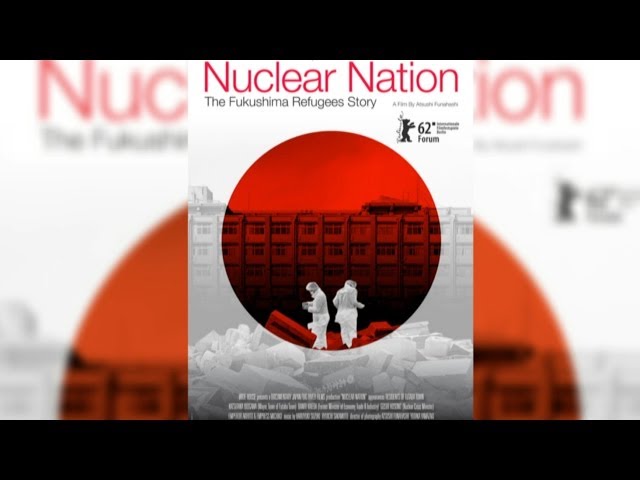
Amy Goodman of Democracy Now explores the 2011 Fukushima Daiichi Nuclear Power Plant crisis through "Nuclear Nation: The Fukushima Refugees Story." This documentary, directed by Atsushi Funahashi, follows former residents of Futaba—the plant's location—during their first year after the disaster.
The film depicts their communal life in an abandoned school near Tokyo. Goodman interviews Funahashi about the refugees' experiences. Watch the entire special broadcast from Japan here.

Amy Goodman on Democracy Now reported from Tokyo on January 15, 2014, covering Fukushima and Japan's nuclear future.
The broadcast marked the third anniversary of the March 11, 2011, earthquake and devastating tsunami that triggered a meltdown at the Fukushima Daiichi nuclear power station. Goodman interviewed David McNeill, a longtime foreign correspondent in Japan and co-author of "Strong in the Rain: Surviving Japan's Earthquake, Tsunami, and Fukushima Nuclear Disaster."
Watch the entire special broadcast from Japan here.

Energy companies like Ambre Energy and Arch Coal Inc. propose transforming Southwest Washington and Pacific Northwest ports into major shipping hubs. These 14 plans would establish a vast transfer station for coal and oil extracted from America's heartland, destined for domestic and overseas markets, primarily in Asia, to meet growing energy demands.
This initiative is part of a global realignment of valuable oil and coal resources. The documentary "Momenta" explores the impact of these proposals and the citizen groups opposing them.

Coal, long the nation's oldest and dirtiest energy source, is rapidly becoming obsolete. The rise of cleaner alternatives challenges its traditional role, leading to its decline.
For further details on this energy transition, visit Beyond Coal. (Published October 23, 2013)
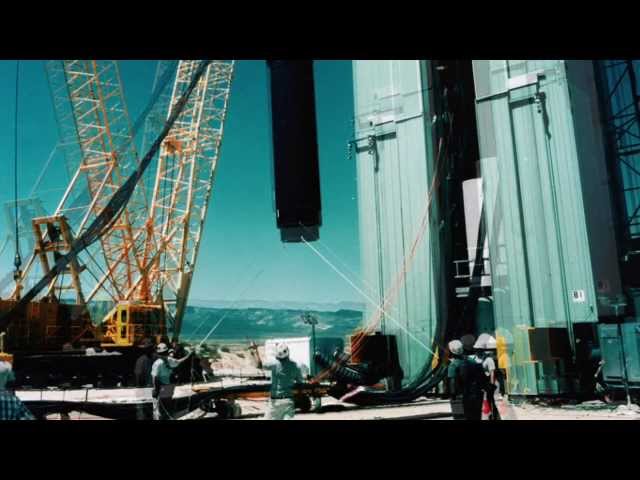
Konstantin Kakaes, a Future Tense fellow at the New America Foundation, studies the causes and consequences of technological innovation.
He offers a concise review of U.S. nuclear testing, noting the last test was 21 years ago. His presentation also updates viewers on the current status of the 1996 ban on all nuclear weapons testing.
- 1
- 2
Environmental Scientist and Advocate
What EarthSayers stands for
Discover Diverse Voices on EarthSayers
Unlike algorithm-driven platforms that push you into a content bubble, we ensure you hear a variety of perspectives from scientists, activists, Indigenous leaders, business innovators, and everyday citizens working toward sustainability.
EarthSayers CINEMA
Watch, learn and lead—sustainability starts with you.
How to Live on Earth | Feature Documentary | Presented by Benedict Cumberbatch
What if the solutions to building a better future already exist? How to Live on Earth is an ambitious documentary that explores how humanity can create a thriving future by collaborating with nature. Presented by Benedict Cumberbatch, the film reveals the potential of teaming up with nature to address our greatest challenges.
Heartwarming and energizing, it offers a hopeful vision for a future where both nature and humanity can thrive. How to Live on Earth is produced by Open Planet Studios in association with Villars Institute Foundation and Silvania. Join the conversation by downloading film assets and sharing your reaction at howtoliveonearth.net/social-toolkit. Explore educational resources from the Villars Institute at YouTube.


