




Showing 20 search results of 5,764 videos found for

The Western Ghats of India are home to 24 species of "dancing frogs" from the Micrixalidae family. These amphibians earned their name because males perform a unique foot-waving display, known as foot-flagging, to attract females during the breeding season.
This distinctive gesture likely compensates for their quiet croaks. Their calls are often too faint to compete with the surrounding environmental noise, making the visual foot-flagging crucial for successful mating.

The Global Precipitation Measurement (GPM) Core Observatory, a joint mission by NASA and the Japanese Aerospace Exploration Agency (JAXA), provides the most detailed worldwide view of rain and snowfall. This satellite-based data is crucial for understanding Earth's freshwater systems.
GPM tracks precipitation from space, offering vital information on where, when, and how much it rains and snows globally. This insight is fundamental for studying our weather, climate, and ecological systems.
For more information on GPM, visit pmm.nasa.gov/GPM.

Ecoliteracy educator Cathy Fitzgerald advised jazz musician Carole Nelson on ecological knowledge for her acclaimed album 'Arboreal' (Irish Times, Feb 2020). This collaboration began as Cathy sought to share ecoliteracy with creatives amidst ecological breakdown.
Holding a PhD in creative practice, Cathy has extensive experience integrating ecological insights into her work. She previously directed ArtLinks and developed a mentoring program for creatives.
Cathy now offers individual mentoring, workshops, and an innovative online course on essential ecoliteracy for creatives and educators via her website: www.haumea.ie. Carole's album 'Arboreal' is on Spotify (after Feb 28, 2020) and CD Baby.

On December 7, 2019, C2G hosted a UNFCCC COP25 side event, led by Executive Director Janos Pasztor, to discuss governing emerging marine climate-altering techniques.
These techniques are being discussed within the Paris Agreement and the ocean's role. While none are ready at scale, they present significant technological and governance challenges requiring stakeholder attention.

This webinar features RMI and special guests discussing the COMET Method's potential. They will explore how it provides powerful insight into the embedded emissions of everyday products.
The discussion will also cover what this means for the urgent push to decarbonize industrial processes and global supply chains.

Kaitlyn's TEDx talk implores us to prioritize our planet's health daily. She highlights how collective small changes can lead to a significant positive impact on the environment.
A junior at WHRHS, Kaitlyn is a member of her school's ALS Alliance Club and secretary of the Lion's International Leo Club. She is also working towards her Girl Scout Gold Award, holds a 2nd-degree black belt in Taekwondo, and captains its competitive demonstration team. Additionally, she enjoys working at a local aftercare program.
This talk was given at an independently organized TEDx event. Learn more at https://www.ted.com/tedx.
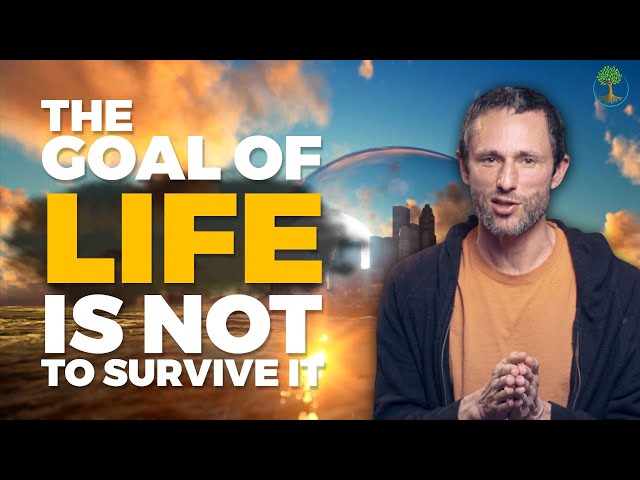
Sustainable Human, a 501c3 non-profit founded by Chris and Dawn Agnos, challenges us to ask: "What world do we want to live in?" Their mission is to explore the narratives driving environmental, social, and economic crises, offering new stories that foster harmony among humanity and with the biosphere. Learn more at sustainablehuman.org.
Support this vital work through monthly contributions via Patreon, a one-time donation, or by volunteering. You can also engage their expertise for storytelling, consulting, or sponsoring a video. Explore Dawn's handmade jewelry at dawnagnos.com.

Watch a video from Collapse Chronicles on YouTube.
Access the content here: Collapse Chronicles Video

The endangered Sonoyta mud turtle, an aquatic species, thrives in one of the Sonoran Desert's driest regions. This unique adaptation allows it to survive in extreme conditions.
Its habitat is severely restricted: a single spring on the U.S.-Mexico border within Organ Pipe Cactus National Monument in southern Arizona, and a small section of Mexico's Rio Sonoyta.

C2G hosted a UNFCCC COP25 side event on December 7, 2019, addressing the governance of emerging marine climate-altering techniques. Safri Burhanuddin from Indonesia's Coordinating Ministry for Maritime Affairs and Investment participated.
Marine climate-altering techniques are being discussed within the context of the Paris Agreement and the ocean’s role. None are ready at scale, and all pose significant technological and governance challenges requiring stakeholder attention.
Learn more at https://www.c2g2.net/marine.
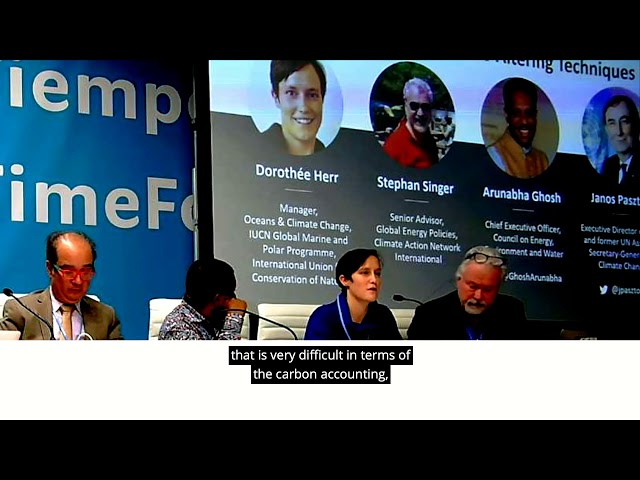
On December 7, 2019, C2G convened an official UNFCCC COP25 side event focused on governing emerging marine climate-altering techniques. Dorothée Herr, from the International Union for Conservation of Nature (IUCN), participated in the panel discussion.
Research into these marine climate-altering techniques is discussed within the context of the Paris Agreement and the ocean’s role in its achievement. None are currently ready for large-scale use, and all pose significant technological and governance challenges requiring stakeholder attention.
Learn more at c2g2.net/marine.

On December 7, 2019, C2G convened a UNFCCC COP25 side event to discuss governing emerging marine climate-altering techniques. Thelma Krug, Vice Chair of the Intergovernmental Panel on Climate Change (IPCC), participated in the panel.
These techniques are being explored within the context of the Paris Agreement and the ocean's role in achieving its goals. However, none are ready for large-scale deployment, posing significant technological and governance challenges that require stakeholder attention.
Learn more about marine technology here.

On December 7, 2019, C2G convened a UNFCCC COP25 side event to discuss governing emerging marine climate-altering techniques. Stephan Singer of Climate Action Network International participated in the panel discussion.
These techniques are being considered within the context of the Paris Agreement and the ocean's role in climate action. However, none are ready for large-scale deployment, and all present significant technological and governance challenges requiring stakeholder attention.
Learn more at https://www.c2g2.net/marine

On December 7, 2019, C2G convened an official UNFCCC COP25 side event to discuss governing emerging marine climate-altering techniques. Stefanos Fotiou, Director of Environment and Development at the United Nations Economic and Social Commission for Asia and the Pacific (UNESCAP), participated in the panel.
These techniques are being explored within the context of the Paris Agreement and the ocean's role in achieving its goals. None are ready at scale, and all pose significant technological and governance challenges that require stakeholder attention.
Learn more about marine climate-altering techniques and their governance at https://www.c2g2.net/marine.

On December 7, 2019, C2G convened a UNFCCC COP25 side event focused on governing emerging marine climate-altering techniques. Mithika Mwenda, Executive Director of the Pan African Climate Justice Alliance, participated as a panelist.
Research into these techniques is ongoing, discussed within the context of the Paris Agreement and the ocean's role. None are ready at scale, and all pose significant technological and governance challenges that require stakeholder attention.
Learn more at https://www.c2g2.net/marine
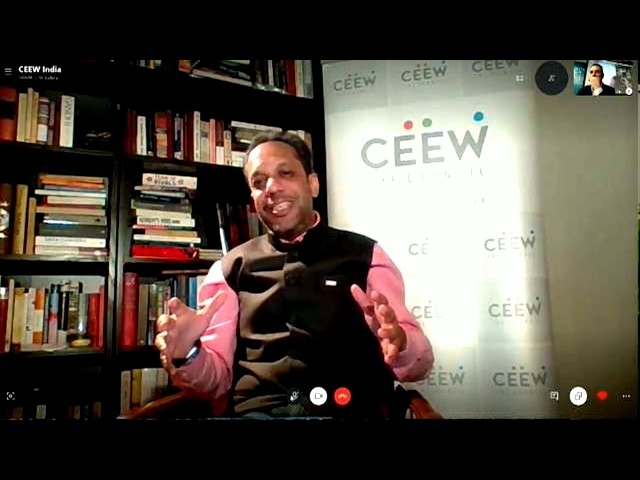
On December 7, 2019, C2G convened an official UNFCCC COP25 side event to discuss governing emerging marine climate-altering techniques. Arunabha Ghosh, CEO of the Council on Energy, Environment and Water, participated in the panel discussion.
Research and potential use of these techniques are being considered in the context of the Paris Agreement and the ocean’s role. None are ready at scale, and all pose significant technological and governance challenges requiring stakeholder attention. Learn more at c2g2.net/marine.

Join members of the Ellen MacArthur Foundation team for a live conversation exploring the circular economy. This compelling concept presents a clear business case for redesigning everyday products and establishing fundamentally new operating models for businesses.
The discussion will delve into critical questions: How does the circular economy differentiate from sustainability or advanced recycling? Is its primary focus on efficiency or effectiveness, and does that distinction matter? Should it be implemented as a top-down or bottom-up approach?
This broadcast features Seb Egerton-Read, Stella Chavin, Sarah O'Carroll, and Laura Franco Henao, who will discuss the underlying values and relevant topics of the circular economy.

As businesses increasingly adopt circular economy strategies, measuring success is crucial. The Ellen MacArthur Foundation created Circulytics, a new company-level analytics tool. It reveals a company's circularity across its entire operations, moving beyond just products and material flows. This tool supports decision-making, highlights strengths and areas for improvement, and offers optional transparency to investors and customers.
Developed with Global Partners and tested by over 30 companies, Circulytics helps organizations understand and advance their circular economy adoption. Key figures involved include Ilma Stankeviciute and Jarkko Havas from the Ellen MacArthur Foundation, and Tom Giddings of DS Smith, who has been instrumental in its assessment and use.
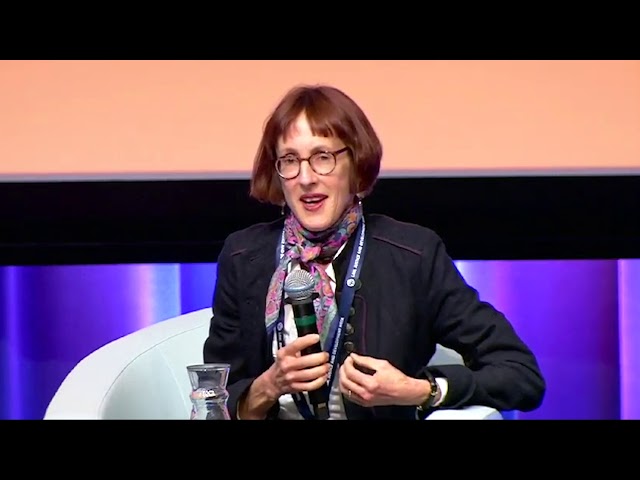
On 4 November 2019, C2G’s senior strategy director, Cynthia Scharf, spoke at the World Bank Law, Justice and Development Week. She emphasized the critical need for governance frameworks concerning large-scale carbon dioxide removal.
Scharf participated in a panel titled “Technology Innovation for Climate Action: Legal and Governance Aspects.” Other panelists included Dave Rejeski (Environmental Law Institute), William Burns (Institute for Carbon Removal Law & Policy, American University), and Erick Fernandes (World Bank).

Janos Pasztor, executive director of the Carnegie Climate Governance Initiative (C2G), discusses the governance of emerging technologies designed to intentionally alter Earth's climate system. He focuses on Solar Radiation Modification (SRM), approaches that reflect sunlight into space to rapidly cool the planet.
Pasztor highlights the current status of SRM research and the critical absence of comprehensive governance frameworks for these technologies. Such essential frameworks are urgently needed but do not yet exist.
For more details, visit C2G's page on Solar Radiation Modification.
Environmental Scientist and Advocate
What EarthSayers stands for
Discover Diverse Voices on EarthSayers
Unlike algorithm-driven platforms that push you into a content bubble, we ensure you hear a variety of perspectives from scientists, activists, Indigenous leaders, business innovators, and everyday citizens working toward sustainability.
EarthSayers CINEMA
Watch, learn and lead—sustainability starts with you.
The Thinking Game | Full documentary | Tribeca Film Festival official selection
“The Thinking Game” is the inside story of DeepMind's groundbreaking AI research, culminating in the Nobel Prize-winning AlphaFold breakthrough. Filmed over five years by the award-winning team behind "AlphaGo," this documentary explores co-founder Demis Hassabis's lifelong pursuit of artificial general intelligence and the rigorous scientific journey from mastering strategy games to solving the 50-year-old protein folding problem.
Following its world premiere at the Tribeca Festival, "The Thinking Game" is now available to watch for free. For those interested in hosting a screening for a classroom, community, or workplace, visit: rocofilms.com/films/the-thinking-game/.


