




Special Collections:
Forests and Oceans
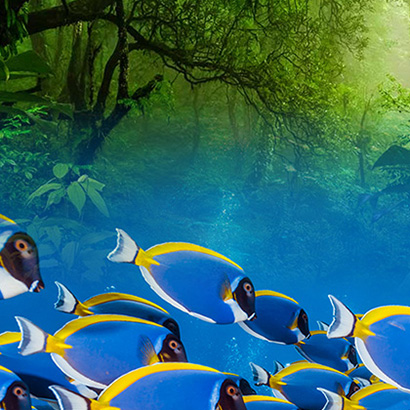

Discover the gentoo penguin in our Marine Life Encyclopedia: https://bit.ly/3QHHJIF.
Join our community of Wavemakers! Subscribe to our channel and stay connected on social media: Instagram, Twitter, and Facebook. p>
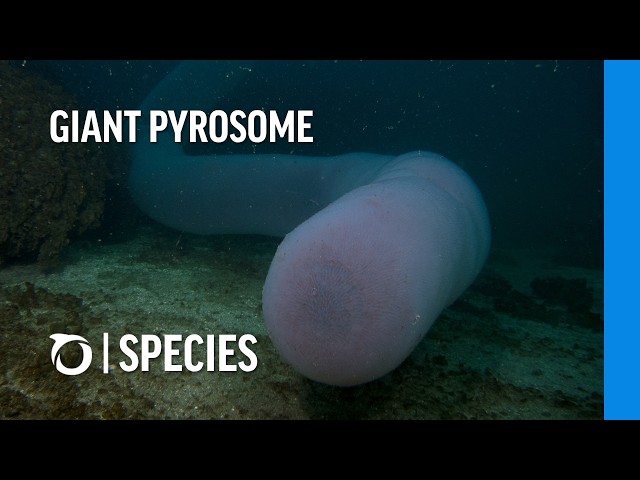
Giant pyrosomes are hollow tubes formed by thousands of linked individuals, large enough for a person to enter. Discover more in our [Marine Life Encyclopedia](https://bit.ly/3E59gw5).
Join our community of Wavemakers! Subscribe to our channel and stay connected on [Instagram](https://www.instagram.com/oceana/), [Twitter](http://twitter.com/oceana), and [Facebook](https://www.facebook.com/oceana/).

Orcas inhabit all oceans, thriving in diverse conditions. These intelligent marine mammals form complex social structures, much like humans. Within their groups, often composed of relatives, older orcas teach younger ones essential hunting and parenting skills.
Discover more about marine life in our encyclopedia: https://bit.ly/3YERB8j. Join our community of Wavemakers by subscribing to our channel! p>

Garden eels live in large colonies, emerging from their burrows to feed on drifting zooplankton. They quickly retreat for safety if predators appear.
Discover more in our Marine Life Encyclopedia. Join our community of Wavemakers by subscribing to our channel.
Stay connected: Follow us on Instagram, Twitter, and Facebook.

The common hake is in crisis, facing dangerous overexploitation. This critical situation stems from years of mismanagement, illegal fishing, and destructive bottom trawling practices.
Such decline not only threatens the species itself but also severely impacts fishing communities that have historically depended on this vital resource.

The Portuguese man o' war isn't a single animal. Discover more in our Marine Life Encyclopedia.
Subscribe to our channel and join our community of Wavemakers! p>

Not all sharks need to swim constantly to breathe. Discover more fascinating facts in our Marine Life Encyclopedia.
Join our community of Wavemakers! Subscribe to our channel for more marine life content. p>
Stay connected with us on social media: Instagram, Twitter, and Facebook.

Sea snakes use their paddle-like tails to hunt eels and other prey underwater. Learn more in our Marine Life Encyclopedia.
Subscribe to our channel and join our community of Wavemakers! p>

Discover the unique marine iguana, the only lizard species that spends significant time at sea. Learn more in our Marine Life Encyclopedia.
Join our community of Wavemakers by subscribing to our channel.

While sharks are commonly associated with oceans, some species uniquely adapt to survive in freshwater environments.
Subscribe to our channel to join our community of Wavemakers.
Stay connected with us on social media: [Instagram](https://www.instagram.com/oceana/), [Twitter](http://twitter.com/oceana), and [Facebook](https://www.facebook.com/oceana/).

Southern elephant seals are the world's largest, weighing up to 11,000 pounds. Discover more fascinating facts in our Marine Life Encyclopedia.
Become a Wavemaker! Subscribe to our channel to join our community. Stay connected with us on Instagram, Twitter, and Facebook.


Celebrate the unique romance of spotted seahorses by symbolically adopting one today: bit.ly/3OuWA6w.
Join our community of Wavemakers! Subscribe to our channel and connect with us on social media: Instagram, Twitter, and Facebook.

Explore the mesmerizing world of manta rays! Learn more in our Marine Life Encyclopedia.
Join our community of Wavemakers! Subscribe to our channel. p>

Explore marine life, including various fish species, in our comprehensive Marine Life Encyclopedia: https://bit.ly/3DWqDiC.
Subscribe to our channel and become part of our Wavemakers community! p>
Stay connected with us on social media: Instagram, Twitter, and Facebook.

Take a dive with the world's largest sea turtle, the leatherback! Learn more in our Marine Life Encyclopedia.
Subscribe to our channel and join our community of Wavemakers! p>
Stay connected with us on social media: Instagram, Twitter, and Facebook.

Stargazers employ a unique ambush hunting strategy, remaining hidden while awaiting prey.
Join our community of Wavemakers by subscribing to our channel.
Stay connected with us on [Instagram](https://www.instagram.com/oceana/), [Twitter](http://twitter.com/oceana), and [Facebook](https://www.facebook.com/oceana/).

Discover fascinating seabirds like puffins, often called 'lovebirds.' Learn more about them and the marine world by watching our content: https://bit.ly/3NFnBE2
Join our community of Wavemakers! Subscribe to our channel for more insights into ocean conservation and marine life.
Stay connected: Instagram: @oceana | Twitter: @oceana | Facebook: @oceana
Environmental Scientist and Advocate
What EarthSayers stands for
Discover Diverse Voices on EarthSayers
Unlike algorithm-driven platforms that push you into a content bubble, we ensure you hear a variety of perspectives from scientists, activists, Indigenous leaders, business innovators, and everyday citizens working toward sustainability.
EarthSayers CINEMA
Watch, learn and lead—sustainability starts with you.
How to Live on Earth | Feature Documentary | Presented by Benedict Cumberbatch
What if the solutions to building a better future already exist? How to Live on Earth is an ambitious documentary that explores how humanity can create a thriving future by collaborating with nature. Presented by Benedict Cumberbatch, the film reveals the potential of teaming up with nature to address our greatest challenges.
Heartwarming and energizing, it offers a hopeful vision for a future where both nature and humanity can thrive. How to Live on Earth is produced by Open Planet Studios in association with Villars Institute Foundation and Silvania. Join the conversation by downloading film assets and sharing your reaction at howtoliveonearth.net/social-toolkit. Explore educational resources from the Villars Institute at YouTube.


