




Special Collections:
The Circular Economy


The 'From Linear to Circular' workshop gathered postgraduate students and young professionals in London to accelerate the transition to a circular economy. Attendees learned and collaborated on shifting mindsets and systems.
The Ellen MacArthur Foundation, a UK charity launched in 2010, is a global thought leader driving the circular economy agenda across business, government, and academia. Supported by key philanthropic and knowledge partners, the Foundation works to accelerate this transition. Find out more at ellenmacarthurfoundation.org.
Subscribe to our YouTube channel and connect with us on social media: Instagram, Facebook, LinkedIn, Twitter, and Medium.

Explore the circular economy, a fundamentally different approach to design, manufacturing, and operations. Four experts from the Ellen MacArthur Foundation will present various ways to introduce this concept.
They will provide practical examples of the circular economy in action. Attendees are invited to share their own methods for explaining this transformative idea and engage in discussion.

Remanufacturing offers clear benefits, yet remains a niche practice. Our guest will discuss its potential to triple by 2050, enabling better design, material, and energy choices for the future.
The show will also explore criticisms of conventional economic growth. Our guest argues we should stop trying to enlarge the economy, and instead learn to "make ourselves at home with this wealth." This involves considering implementation, ensuring inclusivity, and convincing policymakers.

Cities globally are adopting circular economy principles to build thriving, livable, and resilient futures. These principles are integrated into various policies, from planning guidelines and public procurement to citizen and business awareness campaigns. The aim is to leverage technology for economic development, job creation, and CO2 reduction.
The Ellen MacArthur Foundation's cities team supports key cities in this transition. A live broadcast will feature representatives from these leading cities, sharing their progress.
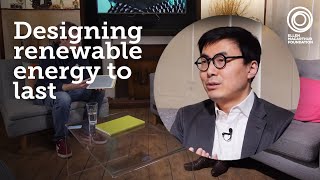
The future energy system will be 100% renewable, a goal potentially achievable sooner with the right incentives. Yet, simply adopting renewables isn't sufficient. Our technology must be designed for repair, reuse, and multiple cycles to ensure true sustainability.
Join our studio guests to explore the opportunities and risks of this renewable transition. We will also feature Professor Lou Yongqi of Tongji University, a leading circular designer from China, who will discuss how new design principles can reshape one of the world's largest economies.
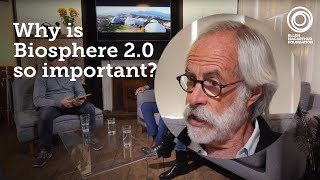
In 1987 Arizona, scientists created Biosphere 2, a 3-acre domed facility designed to mimic Earth's living systems without external aid. Early experiments, where crews lived inside, faced oxygen loss and food shortages. Despite initial failures, Biosphere 2 now conducts some of the world's largest earth science experiments, offering vital insights into natural systems for global challenges.
We will also speak with participants from the Ellen MacArthur Foundation's "From Linear to Circular" program. Forty-four young professionals and students recently completed a week-long study on the circular economy. Discover their experiences, motivations, and how they will apply their learning to their studies and careers.
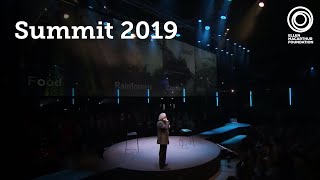
Summit 2019 will showcase the circular economy in action, demonstrating its impact on everyday products like cars, clothing, and beer. Join us via live stream on Thursday, June 13th, from 18:00-19:30 BST.
The event features innovators sharing their stories and redesigned products, offering insights into their inspirations and lived experiences. Learn from these pioneers about the realities, promises, and pitfalls of circular economy innovation.

Tackling plastic waste is a critical obstacle to achieving a circular economy. At the 2019 Pacific Summit, Kosi Latu, Deputy Director of SPREP, discussed the challenges facing the Pacific region and potential solutions.
The Ellen MacArthur Foundation, a UK charity launched in 2010 by world record-breaking sailor Ellen MacArthur, is a global thought leader accelerating the transition to a circular economy.
Learn more about their work at ellenmacarthurfoundation.org, subscribe to their YouTube channel, or connect on Instagram, Facebook, LinkedIn, Twitter, and Medium.

Teina Boasa-Dean of BHW Lands Trust highlighted how MÄori principles can address global challenges during an interview at New Zealand's inaugural Circular Economy Pacific Summit.
The Ellen MacArthur Foundation, a UK charity launched in 2010 by Ellen MacArthur, leads global efforts to accelerate the transition to a circular economy. It works across business, learning, and policy, supported by key partners, establishing the circular economy on the agenda of decision-makers worldwide.
Learn more about our work and the circular economy at ellenmacarthurfoundation.org. Subscribe to our YouTube channel youtube.com/user/made2bemadeagain and follow us on social media.

At the inaugural Circular Economy Pacific Summit, acclaimed author Chris Kutarna joined the Ellen MacArthur Foundation to discuss implementing circular economy principles in New Zealand and leveraging indigenous knowledge to address global challenges.
The Ellen MacArthur Foundation, a UK charity launched in 2010 by world-record sailor Ellen MacArthur, accelerates the transition to a circular economy. It has emerged as a global thought leader, influencing business, government, and academia with support from its philanthropic and knowledge partners.
Explore our work and connect with us online at ellenmacarthurfoundation.org. You can also subscribe to our YouTube channel for more insights.

Explore the Ellen MacArthur Foundation's new online resource suite: "Circular Economy in Cities."
This platform offers key insights, guidance on utilizing its modules, and concrete examples of cities worldwide successfully implementing circular economy principles.

Deep Patient leverages AI to connect thousands of electronic patient record data points, enabling the diagnosis and prediction of previously unpredictable diseases. A 2016 clip featuring journalist David Weinberger illustrates AI's capabilities and its potential for the circular economy, as further detailed in our recent paper.
The Ellen MacArthur Foundation, a UK charity established in 2010, is a global thought leader accelerating the transition to a circular economy through business, learning, and insight.
Explore our work at ellenmacarthurfoundation.org, read our AI paper here, and subscribe to our YouTube channel. Follow us on Instagram, Facebook, LinkedIn, Twitter, and Medium.

To create a fashion industry where clothes never become waste, a three-pronged approach is essential. This involves implementing business models that ensure garments are used for longer durations.
Additionally, clothes must be designed for circularity, allowing them to be remade into new products. Finally, all clothing production should prioritize safe and renewable materials.

Fashion, a daily necessity and form of self-expression, is currently wasteful and polluting. The Ellen MacArthur Foundation's "Make Fashion Circular" initiative aims to transform this by fostering a sustainable textiles economy.
This initiative drives collaboration among industry leaders to ensure clothes are made from safe, renewable materials. It promotes new business models to increase garment use and facilitates turning old clothes into new. This circular economy benefits business, society, and the environment.
Learn more about the initiative at Make Fashion Circular. Animation produced by Beakus.

The Ellen MacArthur Foundation, a UK charity launched in 2010 by sailor Ellen MacArthur, is a global thought leader accelerating the circular economy. Through business, learning, and insight, it influences decision-makers across sectors.
The 2018 Summit in London featured speakers like Azeem Azhar, discussing new rules for technology and how digital innovations reshape our economy. Explore more at ellenmacarthurfoundation.org. Subscribe to our YouTube channels: Main and DIF. Engage by liking, sharing, and commenting. Follow us online: Instagram, Facebook, LinkedIn, Twitter, Medium.

The Ellen MacArthur Foundation, a UK charity launched in 2010, accelerates the transition to a circular economy. Its work, encompassing business, learning, and insight, addresses how we can redesign our economy and future. The 2018 Summit in London explored big ideas, digital technologies, and disruptive realities shaping our economic views, echoing Matthew Taylor's arguments on democracy's vital role.
Find more about our work at ellenmacarthurfoundation.org and subscribe to our YouTube channel. Explore disruptive ideas on the DIF YouTube channel. Connect with us on Instagram, Facebook, LinkedIn, Twitter, and Medium.

The Ellen MacArthur Foundation, a UK charity launched in 2010 by Ellen MacArthur, accelerates the transition to a circular economy. CEO Andrew Morlet discusses building momentum with businesses, policymakers, and educators, focusing on shifting global material flows like plastics.
As a global thought leader, the Foundation establishes the circular economy on the agenda of decision-makers. Its 2018 London Summit exemplified this, showcasing big ideas and digital technologies reshaping our economy. Supported by key partners, the Foundation drives innovation and change.
Find out more about their work at ellenmacarthurfoundation.org.

The 2018 Summit highlighted synthetic biology as a solution to finite resources and increasing global demand. Facing increasing global demand, scientists are now modifying microorganisms like yeast and bacteria into "microscopic factories." This allows them to "grow" a vast range of resources, including milk, meat, and high-performance silk.
The Ellen MacArthur Foundation, a UK charity, launched in 2010 to accelerate the transition to a circular economy. It works with business, government, and academia to establish this agenda. Learn more at www.ellenmacarthurfoundation.org or subscribe to their YouTube channel: https://www.youtube.com/channel/UCQAC2otE5_agzHZPnk3mE5w?view_as=subscriber.

Azeem Azhar, author of The Exponential View, stresses the critical role of values and principles in designing technology and systems amid rapid innovation. The 2018 Summit, held in London on June 21st, explored big ideas reshaping our economy, digital technology's impact, and disruptive realities in business and policy.
The Ellen MacArthur Foundation, a UK charity launched in 2010 by Ellen MacArthur, accelerates the transition to a circular economy. As a global thought leader, it engages decision-makers across business, government, and academia. Discover more about their work, including the DIF multimedia collection, and connect through their channels:
Website: ellenmacarthurfoundation.org | YouTube: Ellen MacArthur Foundation | DIF YouTube: DIF | Instagram: @ellenmacarthurfoundation | Facebook: EllenMacArthurFoundation | LinkedIn: Ellen MacArthur Foundation | Twitter: @circulareconomy | Medium: Circulate News

Keiran Whitaker's startup, Entocycle, operates the world's first fully automated insect farm in London. Using food waste, it produces sustainable insect animal feed, offering an eco-friendly alternative to soymeal and fishmeal, embodying circular economy principles.
The Ellen MacArthur Foundation, a UK charity launched by Ellen MacArthur, accelerates the global transition to a circular economy. A leading voice, the Foundation influences business, government, and academia, supporting innovations like Entocycle and driving disruptive ideas for sustainable solutions.
Learn more at ellenmacarthurfoundation.org. Follow them on Instagram, Facebook, LinkedIn, and Twitter.
Environmental Scientist and Advocate
What EarthSayers stands for
Discover Diverse Voices on EarthSayers
Unlike algorithm-driven platforms that push you into a content bubble, we ensure you hear a variety of perspectives from scientists, activists, Indigenous leaders, business innovators, and everyday citizens working toward sustainability.
EarthSayers CINEMA
Watch, learn and lead—sustainability starts with you.
How to Live on Earth | Feature Documentary | Presented by Benedict Cumberbatch
What if the solutions to building a better future already exist? How to Live on Earth is an ambitious documentary that explores how humanity can create a thriving future by collaborating with nature. Presented by Benedict Cumberbatch, the film reveals the potential of teaming up with nature to address our greatest challenges.
Heartwarming and energizing, it offers a hopeful vision for a future where both nature and humanity can thrive. How to Live on Earth is produced by Open Planet Studios in association with Villars Institute Foundation and Silvania. Join the conversation by downloading film assets and sharing your reaction at howtoliveonearth.net/social-toolkit. Explore educational resources from the Villars Institute at YouTube.


