




Special Collections:
The Circular Economy
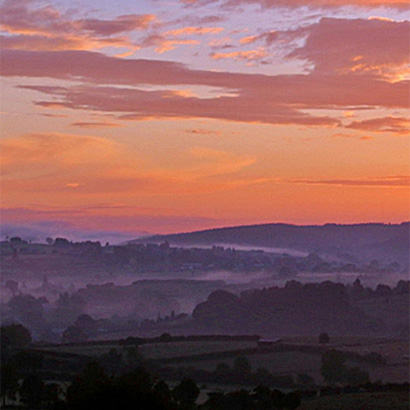

The circular economy is crucial for tackling climate change, as 45% of global greenhouse gas emissions stem from how we make and use products and produce food.
Per Klevnäs, a managing consultant and economist at Material Economics, brings extensive experience from over 100 international energy, resource, and climate projects since the early 2000s. He advises companies on resource and sustainability strategies, covering investment, low-carbon growth, and regulatory planning.

Forest Gardens offer an abundant, beautiful, and climate-resistant way to grow food sustainably. This ancient knowledge, revived for modern use, requires no digging, unnatural additions, or extensive weeding and watering. Primarily perennial, these gardens eliminate the need for annual seeding, providing continuous produce with minimal effort.
The National Forest Gardening Scheme promotes harmony and well-being through planting and enjoying these unique gardens. To make them accessible, the scheme is launching a "Forest Garden in a Box." This initiative is designed for a wide range of settings, including individual gardeners, window boxes, schools, community gardens, and public parks.

The fashion and textile industry significantly impacts the environment, contributing 10% of global greenhouse gas emissions. Producing polyester consumes 70 million barrels of oil annually and takes centuries to decompose. Cotton also demands vast resources, using 20,000 liters of water per kilogram, alongside significant land and pesticides.
Discover how to create clothes that can be made again. This session will reveal technological solutions from Aalto University and feature Petar Ostojic, founder of the Latin American Innovation Centre for the Circular Economy (CIEC). He will explain how combining the circular economy and the Fourth Industrial Revolution can address waste, improve living standards, and tackle other challenges across Latin America.

Nature offers elegant solutions to countless design challenges, from advanced adhesives and biodegradable packaging to incredibly strong materials and the mechanics of flight. The study and application of these natural innovations is known as biomimicry.
Join us to hear from two experts in this field. Richard MacCowan of Biomimicry UK will discuss its role in adopting Industry 4.0 technology, while Veronika Kapsali from University of Arts London will share insights on biomimicry in her textiles work.

Digital technology is essential for transitioning to a circular economy. Data and artificial intelligence, in particular, are critical components in this global shift.
This session will explore how these and other digital technologies can be leveraged to accelerate the move towards circularity.

The transition to a circular economy offers an exciting opportunity to redesign roles and create new jobs. However, critical questions remain: How can we ensure these circular jobs are high-quality, inclusive for both high and low-skilled workers, and genuinely better than those in linear sectors? This systemic shift requires careful consideration of public and private sector roles in fostering an equitable labor market.
Circle Economy is dedicated to securing a positive transition for work and workers. Join us as Circle Economy moderates a discussion with experts and the DIF audience to explore these vital questions and more.
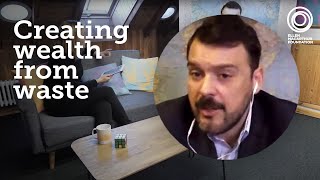
Petar Ostojic highlights the crucial link between the circular economy and the Fourth Industrial Revolution (4IR). The Latin American Innovation Centre for the Circular Economy (CIEC) explores how these two megatrends can unite to foster a new era of prosperity in Latin America.
In this session, CIEC founder Petar Ostojic will explain how this powerful combination can tackle critical challenges like waste and elevate living standards for the region's population, projected to increase by 17% by 2030.
Multistreaming with Restream.io.

Waste and pollution are not accidents but consequences of design choices. By viewing waste as a design flaw, we can prevent its creation from the outset.
Our linear economy relies on non-renewable petroleum, making a circular system impossible. Plants, the origin of petroleum, offer a naturally abundant and renewable alternative.
Historically, converting complex plant material into petroleum-like molecules was challenging. However, researchers at EPFL in Switzerland have developed a method to fully valorize and utilize plants as a petroleum substitute.

Join our session, multistreaming with Restream.io, to explore AgriProtein's innovative solutions. Our current food production system is highly wasteful, environmentally damaging, and unhealthy. This challenge will intensify, as more food will be needed in the next 50 years than in the previous 10,000.
AgriProtein, a South African company, tackles two principal food system challenges. They harness billions of "winged helpers" (insects) to convert vast amounts of organic waste into sustainable animal feed. Discover how they achieve this groundbreaking solution by tuning into this session.

Explore our multistreamed sessions covering the circular economy and a wide range of related topics.
We utilize Restream.io for our broadcasts.
Previous years' content provides insight into our diverse offerings.

It was over an ironing board that Jason realized many everyday products are 90% water, contributing to billions of pounds of plastic waste annually. This insight inspired Replenish, a reusable bottle and concentrate refill platform. It empowers consumers to add their own water at the point of use, breaking the endless cycle of waste in consumer goods.
The Ellen MacArthur Foundation, a UK charity launched in 2010, accelerates the transition to a circular economy. Founded by Ellen MacArthur, it is a global thought leader influencing business, government, and academia. Explore their work at ellenmacarthurfoundation.org and connect via YouTube, Instagram, or Twitter.

Algramo scales reusable packaging globally. With over 2,000 convenience stores and 80%+ reuse rates, it attracts brands like Unilever and Nestle. They co-develop technology, such as Packaging as a Wallet (PaaW) for IoT vending machines, enabling Unilever to sell detergent 30% cheaper. Algramo is also developing a flagship store and electric tricycle fleet.
Launched in 2010 by sailor Ellen MacArthur, the UK's Ellen MacArthur Foundation accelerates the transition to a circular economy. As a global thought leader, it influences business, government, and academia, supported by various partners.
Learn more at ellenmacarthurfoundation.org. Subscribe on YouTube and follow on Instagram, Facebook, LinkedIn, Twitter, and Medium.

Jeannette is dedicated to creating circular systems that eliminate disposable packaging. After nearly a decade researching reusable solutions, she launched reCIRCLE in 2016. This network now includes almost 1,000 partner restaurants, replacing approximately 50,000 disposable containers daily. With a Master's in environmental technology, Jeannette envisions reusable systems transforming many industries.
The Ellen MacArthur Foundation, a UK charity founded in 2010 by Ellen MacArthur, accelerates the transition to a circular economy. A global thought leader, it influences business, government, and academia. Explore their work at [www.ellenmacarthurfoundation.org](https://www.ellenmacarthurfoundation.org) and connect via social media: [YouTube](https://www.youtube.com/user/made2bemadeagain), [Instagram](http://instagram.com/ellenmacarthurfoundation), [Facebook](http://facebook.com/EllenMacArthurFoundation), [LinkedIn](https://www.linkedin.com/company/ellenmacarthurfoundation), [Twitter](http://twitter.com/circulareconomy), [Medium](http://medium.com/circulatenews).
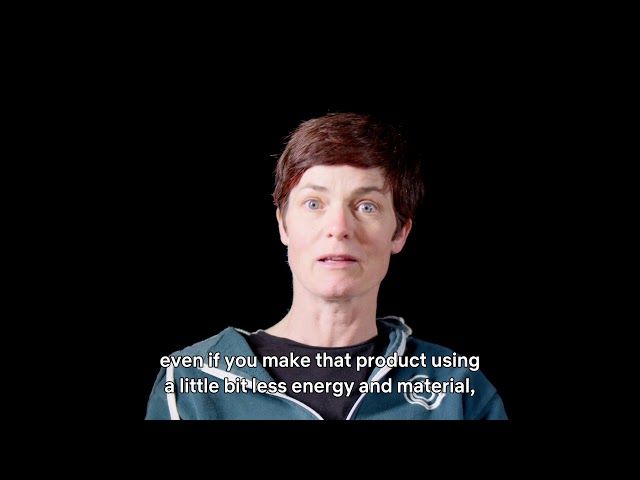
World record-breaking sailor Dame Ellen MacArthur discusses how her extensive time at sea provided a profound revelation about managing our planet's finite resources.
She shares her optimism for transitioning to a circular economy, a system focused on dramatically reducing waste and pollution.

This video explores the challenges of integrating circular economy principles within large institutions. Learn how Fiona Charnley (Exeter University) and Chris Grantham (IDEO) successfully steered their organizations to embrace new ways of thinking and acting. Discover strategies for achieving significant institutional change.
The Ellen MacArthur Foundation, a UK charity launched in 2010, accelerates the transition to a circular economy by influencing business, government, and academia. Subscribe to our [YouTube channel](https://www.youtube.com/user/made2bemadeagain) and learn more at [ellenmacarthurfoundation.org](https://www.ellenmacarthurfoundation.org). Connect with us on [LinkedIn](https://www.linkedin.com/company/ellenmacarthurfoundation) and [Twitter](http://twitter.com/circulareconomy), or find us on other social media platforms.

Postgraduate students and young professionals passionate about the circular economy participated in the Foundation's 'From Linear to Circular' program. During a London workshop, they shared insights on how it enhanced their thinking. Watch Patricia Noble, Estefania Lopez, and Ahsan Syed discuss their experience.
The Ellen MacArthur Foundation is a UK charity dedicated to accelerating the transition to a circular economy through business, learning, and communications.
Find out more at our website. Subscribe to our YouTube channel and connect with us on Instagram, Facebook, LinkedIn, and Twitter.

Convincing colleagues and policymakers about new ideas, especially in environmental practice, requires strategic approaches. Luigi Acquaviva successfully turned environmental concepts into action with Italian regional and city policymakers. Similarly, Cheryl McCulloch engaged Glasgow businesses and policymakers on the circular economy, using a "circular city scan" to shift opinions and foster collaboration.
The Ellen MacArthur Foundation, a UK charity launched in 2010 by sailor Ellen MacArthur, accelerates the global transition to a circular economy. Through business, learning, insight, and communications, it has become a global thought leader, influencing decision-makers across business, government, and academia. Learn more about their work: www.ellenmacarthurfoundation.org.

Remanufacturing offers clear benefits and could triple in size by 2050, enabling better design, material, and energy choices. David Fitzsimons, Director of the European Remanufacturing Council, discusses this potential.
The Ellen MacArthur Foundation, a UK charity founded in 2010 by Ellen MacArthur, is a global leader accelerating the transition to a circular economy.
Watch the full conversation: https://www.youtube.com/watch?v=BgVFHiWszOc&t=641s. Learn more about our work: https://www.ellenmacarthurfoundation.org. Subscribe to our channel: https://www.youtube.com/user/made2bemore. We welcome your comments and feedback.

Cities globally are embracing circular economy principles to create thriving, resilient futures. Discover how leaders in Milan, São Paulo, and London are implementing these systems. Watch the original live stream of this conversation here.
The Ellen MacArthur Foundation, launched in 2010 by Ellen MacArthur, accelerates the transition to a circular economy. As a global thought leader, we engage decision-makers across business, government, and academia. Explore our work at ellenmacarthurfoundation.org.
Subscribe to our YouTube channel. Follow us on Instagram, Facebook, LinkedIn, Twitter, and Medium.

Marcin Jakubowski co-founded the Global Village Construction Set after a costly tractor repair inspired him to promote transparency in manufacturing. This project offers open-source blueprints, enabling everyday makers to build everything from tractors to entire villages affordably.
The Ellen MacArthur Foundation, a UK charity, accelerates the transition to a circular economy, establishing itself as a global thought leader. Watch the original livestream with Marcin Jakubowski: https://youtu.be/YiOLrVVIZlo. Learn more about their work and connect online: https://www.ellenmacarthurfoundation.org.
Environmental Scientist and Advocate
What EarthSayers stands for
Discover Diverse Voices on EarthSayers
Unlike algorithm-driven platforms that push you into a content bubble, we ensure you hear a variety of perspectives from scientists, activists, Indigenous leaders, business innovators, and everyday citizens working toward sustainability.
EarthSayers CINEMA
Watch, learn and lead—sustainability starts with you.
How to Live on Earth | Feature Documentary | Presented by Benedict Cumberbatch
What if the solutions to building a better future already exist? How to Live on Earth is an ambitious documentary that explores how humanity can create a thriving future by collaborating with nature. Presented by Benedict Cumberbatch, the film reveals the potential of teaming up with nature to address our greatest challenges.
Heartwarming and energizing, it offers a hopeful vision for a future where both nature and humanity can thrive. How to Live on Earth is produced by Open Planet Studios in association with Villars Institute Foundation and Silvania. Join the conversation by downloading film assets and sharing your reaction at howtoliveonearth.net/social-toolkit. Explore educational resources from the Villars Institute at YouTube.


