




Special Collections:
The Circular Economy


Originally livestreamed via Restream.io, this session addresses the critical issue of clothing waste. Annually, New York landfills 200 million pounds of clothing. Globally, 73% of materials used for garments are landfilled or burned, with less than 1% recycled into new clothes.
To combat this, campaigns like Wear Next (New York) and Love Not Landfill (London) encourage diverting clothes from waste streams. They advocate for swapping, selling, donating, or recycling to prevent garments from ever becoming waste.
Join this session to understand why these initiatives were launched, their execution, and key learnings.
Fast fashion has drastically shortened clothing lifespans, increasing consumption while ~70% of closets go unworn. Extending garment life is crucial to reduce the industry's impact, cutting new production and textile waste.
The "Switching Gear" project, supported by C&A Foundation and Circle Economy, helps four apparel brands pilot rental and recommerce business models by 2021.
Join a session with innovators from the Switching Gear Enabling Network (SGEN), a global network of over 50 circular solution providers. Discover how pioneers like The Renewal Workshop and Stuffstr are disrupting norms with rental and recommerce, exploring their latest innovations, opportunities, and challenges.

Plastic pollution poses a severe environmental threat. Plastic packaging constitutes nearly half of global plastic waste, much of it single-use. This plastic can take up to a thousand years to decompose, entering our food systems and projected to outweigh fish in oceans by 2050.
Ecoware confronts this challenge by producing 100% biodegradable and compostable packaging. Made from agricultural waste, their affordable and sustainable tableware, packaging, and medical products offer an alternative to single-use plastics.
Learn how Ecoware achieved this and if their model can be replicated in a session.

The UK's oil platforms require decommissioning. A circular economy approach offers a significant opportunity to capture economic value by reusing the vast quantities of steel, rather than simply recycling it.
While the systemic benefits of this reuse strategy are clear, aligning incentives for all stakeholders presents a key challenge. The central question is how to effectively convince every actor to prioritize reuse.
The DIF explores disruptive ideas, stories, and innovations related to the circular economy. But what exactly is the circular economy, and how does it impact you?
Join the Ellen MacArthur Foundation team for an interactive session delving into the circular economy's fundamentals and underlying value questions. Share your insights on the interactive red pen graphic before, during, and after the session.

The future of fashion and its transition to a circular economy rests with creatives across all roles, from designers to marketers and editors. Their diverse contributions are crucial in shaping this industry-wide shift.
This session explores how a new narrative can redirect customer desire from wanting more to prioritizing better, sustainable fashion. We will examine how industry creatives can apply circular principles to their storytelling, fostering a circular economy. Tune in to discover more.

Plastic offset is an emerging environmental paradigm designed to combat global plastic pollution. It aims to fund underfunded waste management social enterprises in the developing world, which offer ethical solutions but struggle to scale.
Inspired by carbon credits, plastic offset provides a transformative funding mechanism to accelerate a circular economy. Achieving meaningful impact is challenging, given the complex interplay of consumer responsibility and producer accountability, but entirely possible.
This initiative will explore local needs and global systems governing waste, from Mumbai to New York.

The built environment consumes half the world's materials, with global construction projected to add Paris-sized floor space weekly by 2060. This necessitates the industry's urgent adoption of circular principles on a large scale.
This session, livestreamed via Restream.io and featuring experts from Arup and GXN Innovation, will explore how to implement these principles and present a compelling business case to drive industry action.

Less than 1% of clothing is recycled, leading to a truckload of textile waste entering landfills every second. However, some designers and brands are challenging this linear "take-make-waste" model by embracing sustainable practices.
A prime example is Rapanui, founded by two brothers on the Isle of Wight. They create clothing from natural materials using renewable energy, designing products for circularity. Worn-out items are recovered to make new ones, and t-shirts are produced on-demand to eliminate overproduction. Rapanui also provides a free platform for global access to their supply chain and technology.
Discover more about their ambitious journey to redesign the fashion industry. Multistreaming with Restream.io.
Five years ago, Lactips pioneered the world's first environmentally friendly plastic, crafted from industrial casein and natural additives. This 100% biosourced, biodegradable material boasts specialty plastic properties, including gas barrier, water solubility, and edibility.
Its unique, patented technology offers a significant opportunity to transform non-biodegradable flexible packaging and substitute single-use plastics in detergency, food, and building applications.
Explore Lactips' journey, scalability, and challenges with founder Marie-Hélène Gramatikoff. Watch the session here.

This session, streamed via Restream.io, addresses the pressing environmental impact of takeaway coffee cups, focusing on wastefulness and recyclability challenges. There's growing demand for improved design, reuse, and recycling solutions to combat ocean plastics and other waste concerns.
Join us to learn how DS Smith is tackling this problem. They developed a scalable coffee cup recycling solution for standard paper mills and launched their innovative Coffee Drop Box. We'll also hear from the Head of Environment at a major UK coffee retailer, discussing the challenges of single-use cups and the roles of reuse and recycling in changing consumer habits.

The Los Angeles fashion industry is substantial, comprising over 11,000 businesses and 38,000 employees. Mayor Garcetti's Green New Deal (GND), an update to the city's 2015 Sustainability pLAn, aims for zero waste and net zero carbon emissions by 2050. The GND specifically mandates engaging the textile and apparel industry to implement zero-waste manufacturing strategies and divert unwanted garments from landfills.
This session will explore current city-level initiatives and how LA-based brands and manufacturers are adopting zero-waste strategies and operating within a circular economy framework.


In an age where governments and businesses hold vast amounts of our data, protecting privacy and ensuring democratic information use is paramount. Cities, home to over half the global population and centers of innovation, are crucial for developing new technologies and business models.
However, truly "smart cities" depend on "smart citizens." This requires guaranteeing access to opportunities that develop critical skills for interacting with new technologies.
Join Mara Balestrini, CEO of Ideas for Change, to explore how citizens can harness their city's data to address local problems.

Indonesian reuse businesses present a promising niche market with the potential to disrupt the single-use plastics crisis. Latest infographics showcase their development on Java and the significant potential for accelerating this movement.
Three remarkable entrepreneurs are leading the charge with innovative circular business models. Kecipir offers an e-commerce platform for fresh produce delivered through a reusable system. Muuse provides a seamless deposit system for reusable cups and containers, powered by a mobile app and smart return stations. Zero Waste Warung implements a blockchain-inspired refill system using reusable sachets across a network of local warungs.
Meet these innovators and engage in a live discussion on strategies needed to rapidly scale and accelerate reuse businesses.
C40's Women4Climate initiative empowers women to lead climate action. Through a global mentorship program and leadership events in C40 cities, it aims to foster new thinking and momentum among future leaders.
Women, who comprise over half the world's population, are often disproportionately impacted by climate change but lack representation in decision-making. Enhancing their participation and leadership is crucial for a healthy, prosperous, and sustainable future for all.
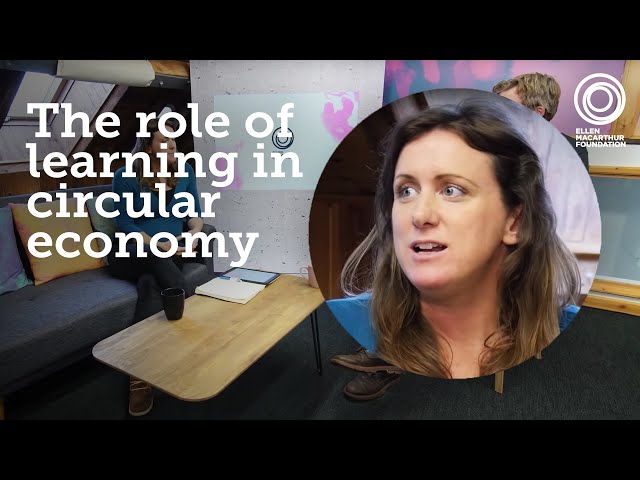
Our thinking, shaped by learning, influences the world. Adopting a circular economy demands a learning journey, new practices, and a significant mindset shift.
The Ellen MacArthur Foundation supports this transition. Our Learning Team works across schools, universities, businesses, and informal settings to foster new mindsets. Tune in to learn more about our work and its impact.

Human population and demands are rapidly growing, straining our finite resources. By 2050, feeding 10 billion people will require more land, farmers, and energy. The critical challenge is achieving this while regenerating our already degraded planet.
Discover how regenerative agroforestry offers a vital solution. This agricultural system mimics nature, preserving forests, mitigating climate change, and restoring planetary health.
Join Felipe Villela, founder of reNature, and Patrick Worms from the World Agroforestry Centre, to learn more.

While bio-based materials are crucial for transitioning to a circular economy, their role in fully replacing fossil fuels and curbing emissions isn't a simple solution. Many companies are investing in bio-based supply chains for everyday products like fuel, fiber, chemicals, and plastics.
However, producing biomass often demands significant land and nutrient resources, highlighting the complexities and challenges involved in their widespread adoption.
Environmental Scientist and Advocate
What EarthSayers stands for
Discover Diverse Voices on EarthSayers
Unlike algorithm-driven platforms that push you into a content bubble, we ensure you hear a variety of perspectives from scientists, activists, Indigenous leaders, business innovators, and everyday citizens working toward sustainability.
EarthSayers CINEMA
Watch, learn and lead—sustainability starts with you.
How to Live on Earth | Feature Documentary | Presented by Benedict Cumberbatch
What if the solutions to building a better future already exist? How to Live on Earth is an ambitious documentary that explores how humanity can create a thriving future by collaborating with nature. Presented by Benedict Cumberbatch, the film reveals the potential of teaming up with nature to address our greatest challenges.
Heartwarming and energizing, it offers a hopeful vision for a future where both nature and humanity can thrive. How to Live on Earth is produced by Open Planet Studios in association with Villars Institute Foundation and Silvania. Join the conversation by downloading film assets and sharing your reaction at howtoliveonearth.net/social-toolkit. Explore educational resources from the Villars Institute at YouTube.


