




Showing 20 search results of 5,688 videos found for

As Portland revitalizes its Old Town/Chinatown, a neighborhood home to two National Historic Districts, there is renewed interest in preserving its architecture and reusing historic buildings. This panel will address the challenges of redeveloping these structures, explore better financial tools and incentives, suggest in-fill considerations, and discuss streamlining processes to attract private investment and restore buildings to full service.
Speakers include Brian Emerick (Emerick Architects), Julie Garver (Innovative Housing), Jeff Joslin (City and County of San Francisco), Peggy Moretti (Restore Oregon), and Ethan Seltzer (Portland State University). Chet Orloff (Pamplin International Collection of Art) will moderate the discussion.

Five activists provided a Washington D.C. legislative update on industrial hemp at Hemfest 2013. Doug McVay narrated the session, featuring panelists Steve Levine, Dave Seber, Adam Eidinger, David Bronner, and David Pillar.
More information from the event can be found at Hemfest 2013.

Environmental protection agencies, created to regulate polluting industries, have been compromised. These bodies, meant to safeguard our environment, have been "hijacked" by the very industries they were designed to oversee.
Legal scholar Mary Christina Wood tells Bill Moyers that our judicial system, along with future generations, may ultimately be our best hope. She suggests they will save us from ourselves.
Environmental protection agencies, designed to regulate polluting industries, have been compromised. Legal scholar Mary Christina Wood suggests that the judicial system and future generations may ultimately save us.
Wood shared this perspective with Bill Moyers, emphasizing the need for intervention beyond current regulatory bodies. (Published January 2, 2015)

On March 31, 2014, the Tennessee House of Representatives overwhelmingly approved a bill to establish a state licensing program for legal hemp cultivation. Sponsor Rep. Jeremy Faison emphasized hemp's historical benefits and cited the recent U.S. Farm Bill, which permits states to regulate production and allows universities to conduct studies.
The legislation passed with an 88-5 vote. Following its approval, Faison distributed various hemp products, such as breakfast cereal, soap, cooking oil, and twine, to legislative leaders, showcasing the plant's diverse applications.

Hemp transforms into textile fiber through a multi-stage process. Initially, harvested hemp stalks undergo retting, where moisture and microbes break down pectin, separating the long bast fibers from the woody core. This crucial step can occur naturally in fields (dew retting) or in controlled water tanks.
Following retting, mechanical decortication further separates and cleans the fibers. These refined fibers are then scutched and hackled to align them, preparing them for spinning. Finally, the processed hemp fibers are spun into yarn, which is subsequently woven or knitted into durable textiles.

"Billion Dollar Crop," a 1994 Australian documentary, explores the history, diverse uses, and future of cannabis, focusing on the versatile and potentially revolutionary plant's potential.
The film highlights how recently developed, non-drug hemp varieties are being researched and cultivated globally for their versatile qualities and environmental benefits. It showcases hemp as an industrial fiber, offering alternatives to wood for paper, cotton for clothes, and plywood for construction, thereby benefiting forests and topsoil.
Produced with Michael Cordell and Jeffrey Bruer, and directed by Barbara Ann Chobocky, the DVD is available from Bull Frog Films.

This short film explores hemp, often called a miracle plant. Discover how this remarkable land plant could significantly benefit humanity and the planet.
It also investigates why most hemp used in U.S. products is imported, not domestically grown.
Uploaded Aug 1, 2010.

Recycle your old electronics responsibly instead of discarding them. These devices contain valuable materials, and recycling them is an easy way to reduce your environmental footprint and potentially earn some cash.
This initiative, "Recycle Electronics Responsibly," was produced by Molly Wood and Rebekah Fergusson for The New York Times. Read the full story here.
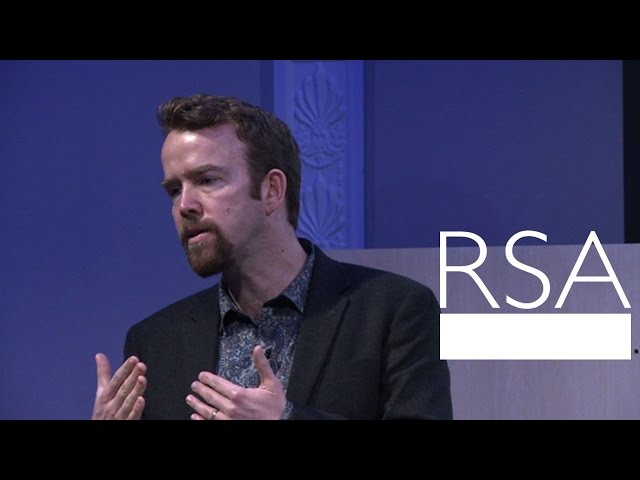
Jonathan Rowson, director of the Social Brain Centre at the Royal Society of Arts, highlights the problematic nature of the word 'spiritual.' It means too much to some and too little to others, leading to diverse interpretations—from psychological depth to philosophical confusion, or a critique of materialism to capitalist exploitation.
Following a two-year RSA inquiry, Dr. Rowson proposes a framework for a post-religious spirituality. This initiative seeks to make the spiritual less nebulous while maintaining its inclusive ambiguity.
The new framework redefines four existential touchstones: Love (from romance to rootedness), Death (from denial to confrontation), Self (from esteem to transcendence), and Soul (from substance to perspective).

Climate change and increasing raw material scarcity demand a radical shift from traditional business models. A circular economy is essential.
Businesses are uniquely positioned to lead this transformation by controlling waste, utilizing cleaner energy sources, and collaborating with NGOs and governments.
This concept was highlighted in an article published on May 14, 2013, by The Guardian.

An algal bloom has contaminated the water supply, leading to the deployment of the National Guard for assistance.
This critical situation was reported on August 3, 2014.
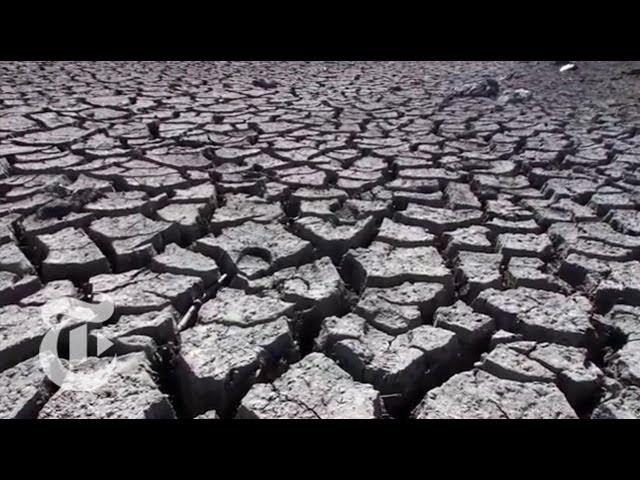
California is experiencing its worst drought on record. Learn about the crisis's severity and its impact on you.
Produced by Carrie Halperin and Sean Patrick Farrell, this story was originally published on July 7, 2014. Read the full article at the New York Times.

This work offers a radical rethinking of our faulty assumptions about money and its proper use.
It is authored by David Korten, a prolific writer whose upcoming book, "Change the Story: Change the Future," is slated for publication in 2015.

Mary Robinson is the former President of Ireland and a former United Nations High Commissioner for Human Rights.
She also serves as CEO of the Mary Robinson Foundation-Climate Justice.

Cree actor Gordon Tootoosis shares his personal beliefs in this video.
Published on November 15, 2011, by Blackstone First Nation. For more information, visit blackstonetheseries.com/first-nation.

Legendary producer and QI mastermind John Lloyd visited the RSA to discuss a profound insight from his extensive reading: our understanding is shaped by what we don't know.
This presentation was published on February 13, 2013.

John Lloyd, the mind behind QI and Blackadder, poses a fundamental question: what do we truly need to know? He challenges our understanding of essential knowledge, what to teach children, and whether intelligence is overrated. Watch his full talk, "General Ignorance," here.
Design and animation were created by TOGETHER. Learn more about the RSA, and follow them on Twitter and Facebook.
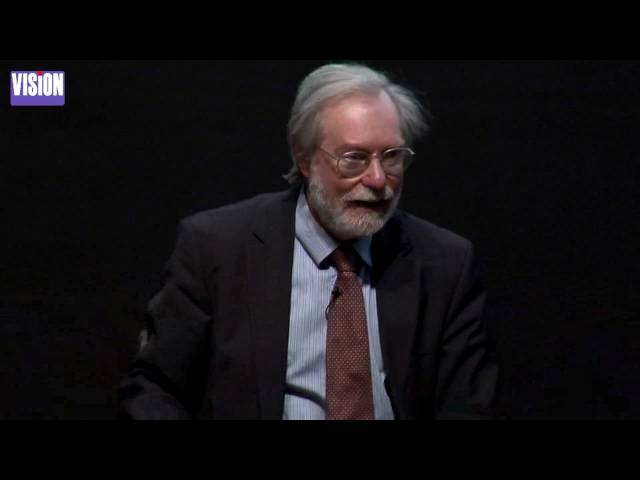
Award-winning economist Paul Collier explores how to reconcile economic growth with environmental sustainability. He argues against "plunder," where a few exploit many, taking resources that belong to future generations. Our obligation to the future is a fundamental principle.
His book, "The Plundered Planet," delves deeper into these ideas. Purchase it on Amazon or at your local bookstore. This content was produced by the RSA (Royal Society for the encouragement of Arts, Manufactures & Commerce).
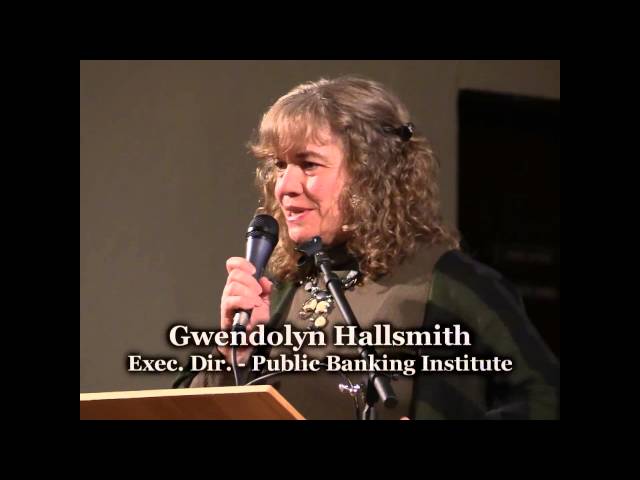
A public forum, "The Possibilities for a Public Bank in Seattle," recorded December 10, 2014, explored how residents could benefit from public banking. Moderated by Way ne Lau of Rainier Valley Community Development Fund, the event opened with Senator Bob Hasegawa emphasizing the long-term impact of such initiatives.
The distinguished panel included Council member Licata; Karl Beitel, Director of the Public Bank Project, who delivered an exceptional historical overview of public banking versus privatization; Dr. Thomas Keidel from the Federation of German Banks; and Gwendolyn Hallsmith, Executive Director of the Public Banking Institute and author of Creating Wealth: Growing Local Economies with Local Currencies.
Environmental Scientist and Advocate
What EarthSayers stands for
Discover Diverse Voices on EarthSayers
Unlike algorithm-driven platforms that push you into a content bubble, we ensure you hear a variety of perspectives from scientists, activists, Indigenous leaders, business innovators, and everyday citizens working toward sustainability.
EarthSayers CINEMA
Watch, learn and lead—sustainability starts with you.
The Thinking Game | Full documentary | Tribeca Film Festival official selection
“The Thinking Game” is the inside story of DeepMind's groundbreaking AI research, culminating in the Nobel Prize-winning AlphaFold breakthrough. Filmed over five years by the award-winning team behind "AlphaGo," this documentary explores co-founder Demis Hassabis's lifelong pursuit of artificial general intelligence and the rigorous scientific journey from mastering strategy games to solving the 50-year-old protein folding problem.
Following its world premiere at the Tribeca Festival, "The Thinking Game" is now available to watch for free. For those interested in hosting a screening for a classroom, community, or workplace, visit: rocofilms.com/films/the-thinking-game/.


