




Showing 20 search results of 5,688 videos found for

Humans have long settled and farmed grasslands across the globe. These vital ecosystems are unique habitats, supporting vast herds and many of Earth's largest land mammals.
It is imperative that we re-evaluate our approach to grassland use, lest we lose these invaluable natural resources forever.

A growing global population presents a significant challenge: how can we produce enough food without expanding our current agricultural land? This necessitates exploring alternative farming methods.
Could innovative farm designs or sustainable practices offer a viable solution to meet future food demands efficiently and responsibly?

Ocean farmer Bren Smith demonstrates how new underwater farming techniques for seaweed and sustainable shellfish can support our oceans and revolutionize food production.
This initiative, part of #OurPlanet, is a collaboration with the World Economic Forum. We showcase innovative solutions for climate change and nature restoration, bringing you a new inspirational story each week.
Read more: Pioneers for Our Planet #ShareOurPlanet #VoiceForThePlanet

Sharks are vital indicator species for coral reef viability. Without them, fish populations can go unchecked, causing significant damage and threatening the delicate balance of these crucial marine ecosystems.
Join Oceana in demanding a #FinBanNow to protect sharks and ensure the health of our coral reefs. Support the initiative here: Oceana Fin Ban

A young bottlenose dolphin mother has adopted and is caring for a melon-headed whale calf. This unusual interspecies adoption showcases a remarkable bond in the marine world.
Researchers are uncertain why the dolphin chose to nurture a calf from another species, but they speculate it may be due to empathy for the orphaned whale.
Support marine life protection. Join Oceana to help safeguard dolphins and other ocean creatures: Oceana.

Cities are vital for advancing the circular economy, unlocking economic, environmental, and social benefits, especially as two-thirds of the global population will live in urban centers by 2050. Currently, cities face challenges from a "take-make-waste" linear economy. A circular economy offers a critical opportunity to rethink resource use and ensure long-term urban prosperity.
The "Circular Economy in Cities" project focuses on urban systems like buildings, mobility, and products, guiding city governments on implementing circular principles and policies. The Ellen MacArthur Foundation, a UK charity, is a global leader accelerating this transition.
Learn more about our work at ellenmacarthurfoundation.org and subscribe to our channel: YouTube.
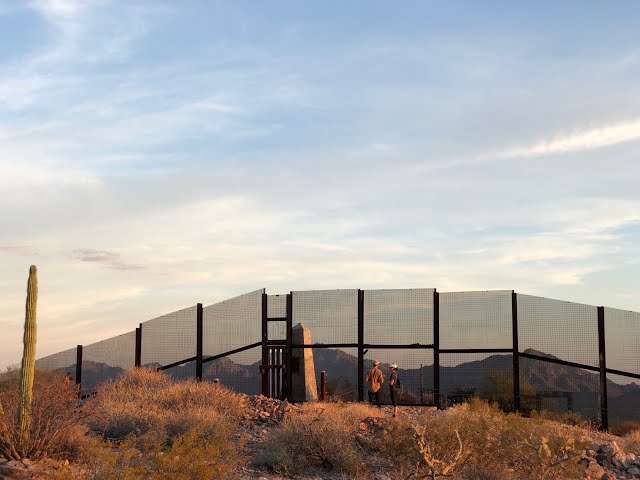
In the latest Border Views video, the Center's Laiken Jordahl explores Arizona's Organ Pipe Cactus National Monument. This vital national monument faces an imminent threat.
It is poised to become one of the first wild places permanently scarred by the Trump administration's border wall. We must act to prevent its construction and protect this irreplaceable natural area.

Achieving a 100% clean energy economy in the U.S. presents challenges, including modernizing the grid, addressing power storage, and electrifying transportation.
Russell Gold's new book, "Superpower: One Man's Quest to Transform American Energy," explores wind power's history as a potential roadmap for renewable success. It delves into the transition from fossil fuels and how to finance our clean energy future.
Join Lynn Doan (Bloomberg News), Russell Gold (The Wall Street Journal), and Jigar Shah ("The Energy Gang") for a conversation on redesigning the U.S. energy landscape.
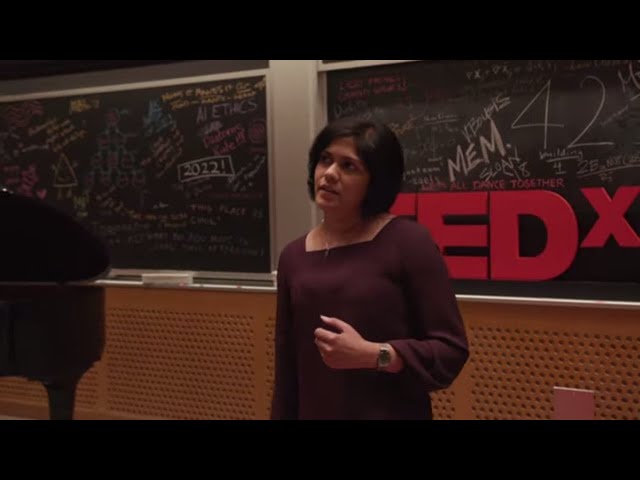
Airline delays and cancellations cost over $50 billion annually. Hamsa Balakrishnan, an MIT Bisplinghoff Professor, addresses this critical issue, proposing AI and network analytics to build resilience against expected and unexpected disruptions in air travel.
Her research focuses on control and optimization algorithms for large-scale air transportation systems. Her contributions include airport congestion control, air traffic routing, machine learning for delay prediction, and environmental impact mitigation. This talk was given at a TEDx event. Learn more at https://www.ted.com/tedx.


Beyond environmental and physical impacts, climate change significantly affects mental health, leading to "climate anxiety" characterized by dread, hopelessness, and sleep issues. Psychotherapists like Leslie Davenport note patients' ambient anxiety, likening these feelings to the stages of grief for environmental and lifestyle loss. Acknowledging these emotions is crucial to prevent despair.
Experts like Renee Lertzman emphasize staying present with such feelings. Bryant Welch advocates for open conversations about climate change, highlighting the power of listening to foster connection and hope. Naming anxieties helps tame them, cultivating optimism and improving mental well-being.
For more information, visit ClimateOne.

Vince Hall challenges conventional hunger solutions, arguing communities already possess enough food. He debunks traditional approaches and their environmental impact, advocating for effective food rescue programs to end hunger and save the planet.
As CEO of Feeding San Diego, the county’s leading hunger relief agency, Hall spearheads innovative food rescue efforts. Under his leadership, the organization provides over 25 million meals annually, addressing hunger for one-eighth of San Diegans, including 127,000 children.
Hall brings extensive nonprofit and public sector management experience, notably as Staff Director for Governor Gray Davis. This talk was delivered at a TEDx event. Learn more at https://www.ted.com/tedx.

Economist Johan Eyckmans champions carbon pricing as an efficient, albeit counter-intuitive, policy tool for solving global warming. He argues it can effectively address climate issues while simultaneously increasing overall welfare.
Eyckmans, who holds a Ph.D. in economics from KU Leuven (1997) with a focus on international environmental agreements, shared his insights at a TEDx event. Learn more at https://www.ted.com/tedx.

Jon Foley, Executive Director of Project Drawdown, emphasizes the profound impact of empowering women and girls in addressing climate change.
He states that combining solutions such as education, reproductive access, and family planning creates one of the most powerful strategies available for tackling the climate crisis.

Drip irrigation, while highly water-efficient for crops, prevents groundwater recharge. This observation comes from Faith Kearns, a scientist at the California Institute for Water Resources.
The lack of groundwater replenishment raises a critical question: could this necessitate a return to less efficient methods, such as flood irrigation?

Jonathan Foley, executive director of Project Drawdown, asks a critical question: "What's the most limiting thing between today and success?"
He emphasizes identifying and systematically removing obstacles in policy, markets, capital, or rules, stating we must "knock them down, domino by domino."

#SharkWeek 2019 is more than a celebration; it's a crucial opportunity to protect these magnificent creatures.
Sharks face severe threats from overfishing, with fins from up to 73 million sharks entering the global fin trade annually. This unsustainable practice devastates shark populations worldwide.
It's time to act. Support a #FinBanNow to safeguard sharks for future generations. Learn more here: https://bit.ly/2YxN3UF

The world's oceans are already drowning in plastic trash. Instead of stemming this pollution, plastic manufacturers aim to dramatically increase U.S. plastic production over the next decade.
Take action: https://biodiv.us/2K38a81


Civil Eats author Twilight Greenaway highlights a profound irony: those who grow our food are among the most vulnerable to climate change's impacts.
Farm workers face significant threats, including extreme heat and soil-borne illnesses, underscoring the severe risks to this essential labor force.
Environmental Scientist and Advocate
What EarthSayers stands for
Discover Diverse Voices on EarthSayers
Unlike algorithm-driven platforms that push you into a content bubble, we ensure you hear a variety of perspectives from scientists, activists, Indigenous leaders, business innovators, and everyday citizens working toward sustainability.
EarthSayers CINEMA
Watch, learn and lead—sustainability starts with you.
The Thinking Game | Full documentary | Tribeca Film Festival official selection
“The Thinking Game” is the inside story of DeepMind's groundbreaking AI research, culminating in the Nobel Prize-winning AlphaFold breakthrough. Filmed over five years by the award-winning team behind "AlphaGo," this documentary explores co-founder Demis Hassabis's lifelong pursuit of artificial general intelligence and the rigorous scientific journey from mastering strategy games to solving the 50-year-old protein folding problem.
Following its world premiere at the Tribeca Festival, "The Thinking Game" is now available to watch for free. For those interested in hosting a screening for a classroom, community, or workplace, visit: rocofilms.com/films/the-thinking-game/.


