



Special Collections:
Oceans
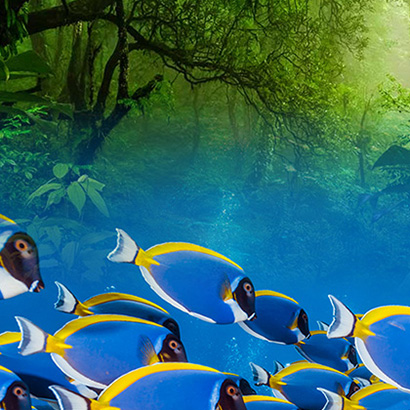
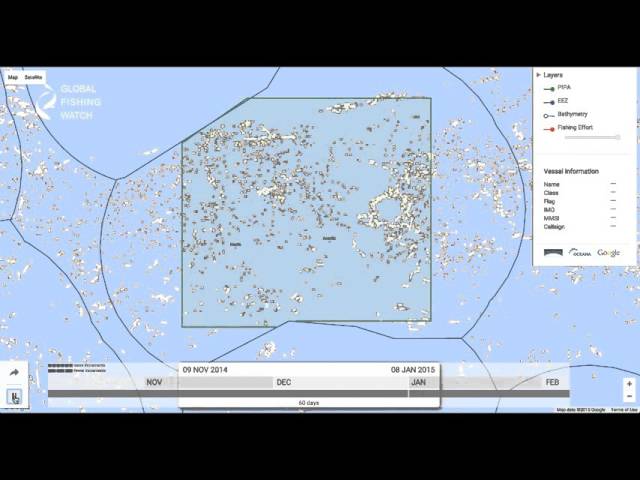
Oceana's report highlights Global Fishing Watch's (GFW) ability to monitor fishing activity in marine protected areas (MPAs) worldwide. GFW provides a clear view of how effectively policies control fishing in these vital zones.
A collaboration between SkyTruth, Oceana, and Google, GFW was used to document the success of the Phoenix Islands Protected Area (PIPA). After new regulations established PIPA as a no-take area, GFW detected a drastic reduction in fishing, demonstrating the policy's positive impact.


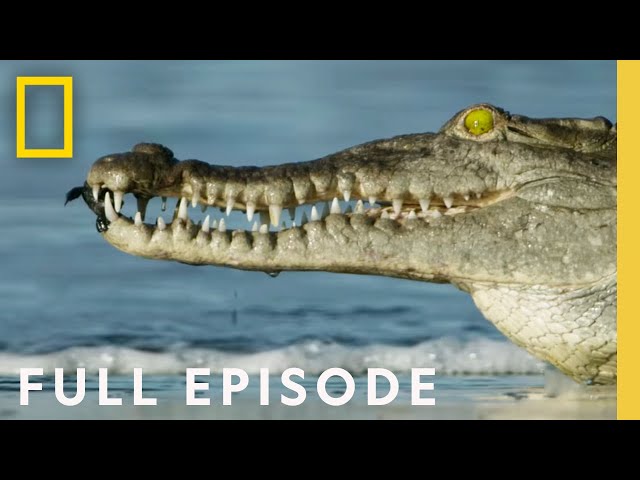
Dive into Earth’s oceans with *Hostile Planet*, a beautifully filmed series showcasing animals adapting to extreme environments. Hosted by survivalist Bear Grylls, the show reveals epic stories of survival on our fast-changing planet.
Watch the full season on Disney+, or stream other National Geographic content on Hulu, the NGTV app, or ABC app. Subscribe to Nat Geo on YouTube for more episodes and follow them on social media for updates.

A new Oceana report reveals that the illegal seafood trade, partly fueled by U.S. demand, devastates fishing communities worldwide. Oceana advocates for expanded traceability and transparency requirements for all seafood imports.
Despite being the world's largest seafood importer, the U.S. Seafood Import Monitoring Program (SIMP) covers only 13 species, leaving 60% of imports vulnerable to illegal, unreported, and unregulated (IUU) fishing. This loophole allowed an estimated $2.4 billion in IUU seafood into the U.S. market in 2019, causing global economic and ecological damage.
Oceana urges President Biden to expand SIMP to include all imported seafood and implement comprehensive "net to plate" traceability to protect ocean health and livelihoods.


Oceana proudly celebrates its 20th anniversary this year. We are marking two decades of dedicated work protecting and restoring the world's oceans.
This milestone provides an opportunity to spotlight our significant conservation victories achieved globally, reflecting our unwavering commitment to marine life and healthy seas.


Every year, 33 billion pounds of plastic pollute our oceans, choking marine life and breaking into microplastics that we ingest. This global crisis impacts marine ecosystems and human health.
Support Oceana's efforts to protect our oceans and marine animals. Donate today at Oceana.org/give.
Stay connected with us on social media: Instagram, Twitter, and Facebook.

A massive Norwegian salmon farm is planned near Acadia National Park, threatening Frenchman Bay with noise, light pollution, boat traffic, and billions of gallons of daily waste.
This facility, projected to produce half of Eastern Canada's salmon, risks introducing disease and parasites, often requiring vast amounts of harmful pesticides and chemicals.
Join us in urging Governor Janet Mills to publicly oppose this project and protect Maine’s coastal way of life. Take action: https://www.Oceana.org/SaveMaine

The community's message is unequivocal.
It is now time to act decisively and #ProtectOurCoast.

A new Oceana report reveals widespread non-compliance with speed limits in critical North Atlantic right whale protection zones. Analyzing vessel speeds from 2017-2020, the study found nearly 90% non-compliance in mandatory areas and 85% non-cooperation in voluntary zones along the U.S. Atlantic coast. Only about 360 critically endangered right whales remain.
Vessel collisions are a leading cause of death for these whales. Studies show that reducing vessel speeds to 10 knots can cut the risk of fatal strikes by 80-90%. While the analysis focused on larger vessels, all vessel sizes pose a threat; a 54-foot recreational vessel recently killed a calf.

Oceana's report reveals widespread vessel speeding in critical North Atlantic right whale habitats. With only about 360 whales left, non-compliance in mandatory speed zones reached nearly 90% from 2017-2020, and non-cooperation in voluntary areas was almost 85%.
Vessel collisions are a primary cause of death for these endangered whales. Studies show that reducing vessel speeds to 10 knots can cut the risk of fatal strikes by 80-90%.
Oceana is urging NOAA to immediately revise U.S. Atlantic vessel speed regulations to prevent the extinction of North Atlantic right whales.

The oceans are Earth's most profoundly impacted yet practically invisible climate change battleground. Watch The YEARS Project's newest video, featuring Joshua Jackson, as he explores the effects of ocean warming and acidification on the Great Barrier Reef.
Continue the journey: Watch 'Collapse Of The Oceans' with Joshua Jackson, Part 2, available here.


This Earth Day, we celebrate Oceana Board member and record-holding big wave surfer Maya Gabeira. An ESPY winner, she has served as an Oceana Ambassador for over a decade, advocating for marine habitat protection through initiatives like the "Catch a Break" PSA.
On April 22, 2021, partner Nautica will match all customer donations, with 100% of contributions supporting Oceana program initiatives.


Conch shells house large sea snails. Learn more in our [Marine Life Encyclopedia](https://bit.ly/3eJNt1G).
Join our community of Wavemakers by subscribing to our channel.
Stay connected: [Instagram](https://www.instagram.com/oceana/), [Twitter](http://twitter.com/oceana), [Facebook](https://www.facebook.com/oceana/).
Environmental Scientist and Advocate
What EarthSayers stands for
Discover Diverse Voices on EarthSayers
Unlike algorithm-driven platforms that push you into a content bubble, we ensure you hear a variety of perspectives from scientists, activists, Indigenous leaders, business innovators, and everyday citizens working toward sustainability.
EarthSayers CINEMA
Watch, learn and lead—sustainability starts with you.
How to Live on Earth | Feature Documentary | Presented by Benedict Cumberbatch
What if the solutions to building a better future already exist? How to Live on Earth is an ambitious documentary that explores how humanity can create a thriving future by collaborating with nature. Presented by Benedict Cumberbatch, the film reveals the potential of teaming up with nature to address our greatest challenges.
Heartwarming and energizing, it offers a hopeful vision for a future where both nature and humanity can thrive. How to Live on Earth is produced by Open Planet Studios in association with Villars Institute Foundation and Silvania. Join the conversation by downloading film assets and sharing your reaction at howtoliveonearth.net/social-toolkit. Explore educational resources from the Villars Institute at YouTube.


