




Showing 20 search results of 5,688 videos found for

Katherine Hamilton, President of the Gridwise Alliance, is discussing a key topic.
She focuses on the $3.6 billion in stimulus funding designated for smart grid technology and regional energy management.

The recent dust storm in Sydney raises questions about climate change. With Australia enduring a decade-long drought and California in its third year, could similar dust events impact California?
Explore our universe and related phenomena by visiting Science Magazine's YouTube Channel.

Jacqueline Novogratz's *The Blue Sweater* shares insightful stories and unforgettable characters. These range from women dancing in a Nairobi slum and unwed mothers starting a bakery, to courageous Rwandan genocide survivors and entrepreneurs serving the poor against immense odds.
The book is an inspiring account of Novogratz's lifelong quest to understand global poverty and discover innovative solutions.

The Oregon Sustainability Center (OSC) is a planned 200,000+ square foot urban, mixed-use high rise. It will feature Net Zero Energy and local material sourcing, among other sustainable elements.
This collaborative vision is the result of a unique public/private partnership. It brings together city and state government, higher education, nonprofit organizations, and the business community.

Fred Kirschenmann, a distinguished leader in sustainable agriculture and an organic farmer, concluded his reflections on agriculture's future at the Organicology conference in Portland, Oregon. He began by addressing the "third elephant in the room": climate change.
Kirschenmann emphasized that climate change is already impacting regions worldwide, citing examples like Australia, China, and California. His insights underscore the urgent need to confront this global challenge within agricultural practices.

Fred Kirschenmann, Distinguished Fellow at the Leopold Center for Sustainable Agriculture, asserts that organic farming doesn't automatically equate to sustainability. He advocates for a shift from a "steady state" to "resiliency," noting that "greening up" isn't enough.
Kirschenmann, a third-generation organic farmer and long-time leader, highlights the unsustainable depletion of finite energy (hydrocarbons) and water resources. He warns that technology alone cannot provide substitute solutions. This insight stems from his talk at the Organicology conference.

In this old bikeTV segment, Mark Lakeman from Portland, OR's City Repair Project discusses the organization's origins and mission.
He details how the community actively engages in both the creation and utilization of public spaces, fostering a collaborative approach to urban development.

An EcoDistrict is a neighborhood or district dedicated to significantly improving its environmental performance. This commitment is realized through an integrated strategy.
This strategy involves engagement, self-governance, and benchmarking to guide informed decisions. Key areas include demand management, green building, infrastructure, and community best practices.

Oregon aimed for 25% renewable energy use by 2020, establishing itself as a global hub for solar manufacturing.
SolarWorld in Hillsboro exemplifies this leadership. With over 2,700 employees, the company is recognized as one of the world's largest solar energy businesses.

On April 17, 2009, MoneyTV's Don Baillargeon interviewed Tom Djokovich, CEO of XsunX, Inc.
Their discussion focused on the solar power industry.

SeQuential Pacific Biodiesel has completed a new, expanded plant. Featuring advanced technology, it represents Pacific Biodiesel's most efficient design to date.
Community-based biodiesel production offers a vital way to provide local and sustainable energy to any region.

Janine Benyus urges inventors to look to nature for design solutions. She demonstrates how natural principles inspire innovative products—from waterproof materials to aerodynamic and solar-powered technologies—achieving spectacular results.
Presented on August 6, 2009, this talk highlights the power of biomimicry. Explore more at the Biomimicry Institute, TED.com, and TED's Top 10 Talks.

In a 2007 talk from TEDtalksDirector, Worldchanging.com founder Alex Steffen stressed the urgent need to reduce humanity's ecological footprint. Learn more at TED.com.
Steffen argues this is critical because the Western consumer lifestyle is rapidly spreading globally. We are currently consuming resources at a rate requiring five planets, yet we possess only one.

On October 19, 2009, acclaimed filmmaker and internet phenomenon Annie Leonard delivered a speech at Bioneers.
Leonard exposed the hidden costs of consumption, offering a hopeful vision for moving beyond the "Age of Stuff." Her presentation advocated for a future where "doing the right thing" becomes the default option. You can find more from Bioneers on their YouTube channel.

Acclaimed filmmaker Annie Leonard exposes the hidden costs of consumption, offering a hopeful vision for moving beyond the "Age of Stuff."
Explore her films and work by searching for "Annie" on EarthSayers. For more information, visit her Bioneers page: bioneers.org/annie-leonard.

On October 19, 2009, acclaimed filmmaker Annie Leonard explored the hidden costs of consumption and presented a hopeful vision for moving beyond the "Age of Stuff."
For more on her work, visit http://www.bioneers.org/annie-leonard. Additional content is available on earthSayers; search "Annie."
*Manufactured Landscapes* is a striking documentary exploring the work of acclaimed artist Edward Burtynsky. Internationally recognized for his large-scale photographs of "manufactured landscapes"—quarries, factories, and dams—Burtynsky transforms industrial sites and waste into beautiful art.
The film follows him through China, documenting the effects of its vast industrial revolution. Through breathtaking sequences, it expands on Burtynsky's photographic narratives, prompting reflection on humanity's environmental impact and showcasing both industrial epicenters and their waste.

Oregon is an excellent business location. The Oregon Economic and Community Development Department (OECDD) actively promotes the state globally, focusing on retaining existing companies and attracting new ones.
A key industry where Oregon holds competitive advantages is solar cell manufacturing. OECDD's targeted recruitment has successfully brought significant investment, with companies like Solaicx and SolarWorld establishing operations and creating hundreds of new jobs.
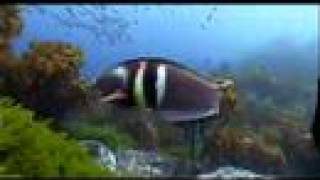
Marine life has long faced unchecked exploitation. Rapid technological advances have equipped vessels and equipment with unsustainable power and reach, far exceeding nature's ability to maintain marine populations.
If this continues, the consequences for the marine environment and dependent communities will be severe. For more information, visit Greenpeace's oceans campaign.
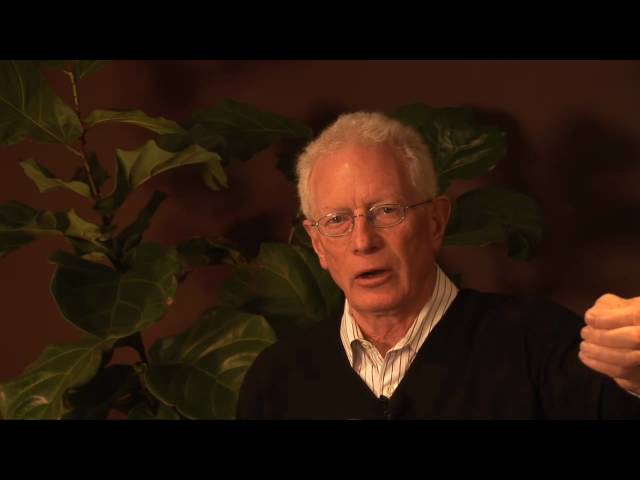
Dennis Wilde, a Principal at GEDI, is a nationally respected green building expert. With over 20 years in urban planning and design, and active in real estate since 1980, he co-founded GEDI's Sustainable Solutions division. His responsibilities include feasibility studies, pre-construction and construction management, and overall project oversight.
Wilde champions innovative concepts like EcoDistricts, which are neighborhood-based systems. He advocates for reducing consumption, adopting closed-loop systems, and replacing narrow, siloed thinking with holistic, appropriately scaled, and decentralized approaches.
Environmental Scientist and Advocate
What EarthSayers stands for
Discover Diverse Voices on EarthSayers
Unlike algorithm-driven platforms that push you into a content bubble, we ensure you hear a variety of perspectives from scientists, activists, Indigenous leaders, business innovators, and everyday citizens working toward sustainability.
EarthSayers CINEMA
Watch, learn and lead—sustainability starts with you.
The Thinking Game | Full documentary | Tribeca Film Festival official selection
“The Thinking Game” is the inside story of DeepMind's groundbreaking AI research, culminating in the Nobel Prize-winning AlphaFold breakthrough. Filmed over five years by the award-winning team behind "AlphaGo," this documentary explores co-founder Demis Hassabis's lifelong pursuit of artificial general intelligence and the rigorous scientific journey from mastering strategy games to solving the 50-year-old protein folding problem.
Following its world premiere at the Tribeca Festival, "The Thinking Game" is now available to watch for free. For those interested in hosting a screening for a classroom, community, or workplace, visit: rocofilms.com/films/the-thinking-game/.


