




Special Collections:
Forests and Oceans

Sharon Lavigne, founder of the faith-based environmental justice group Rise St. James, was the 2021 North American winner of the Goldman Environmental Prize. She received the award for her work fighting chemical plants in St. James Parish, Louisiana.
Support Sharon's efforts: Rise St. James

Chelalakem Pamela Bond serves on the Snohomish Tribal Council as a Councilwoman and the Tribe's Fish, Wildlife, and Environment Director. She is also the Founder and Co-Director of Salish Sea Environmental Education and Action.
Bond is a Cultural Educator and Traditional Teacher for the Duwamish Longhouse and Cultural Center, specializing in traditional plant medicine and food. Support her work: PayPal.

Dr. Nevada Winrow, a Pediatric Neuropsychologist, is the Founder & CEO of Black Girls Dive Foundation. She brings over a decade of experience from clinical practice, academia, and higher education administration.
A PADI Master Scuba Diver, Dr. Winrow is a member of the Women's Diving Hall of Fame and the American Academy of Underwater Sciences. She also serves as the National Chairwoman of Youth programs for the National Association of Black Scuba Divers.
Support her work: Black Girls Dive Foundation
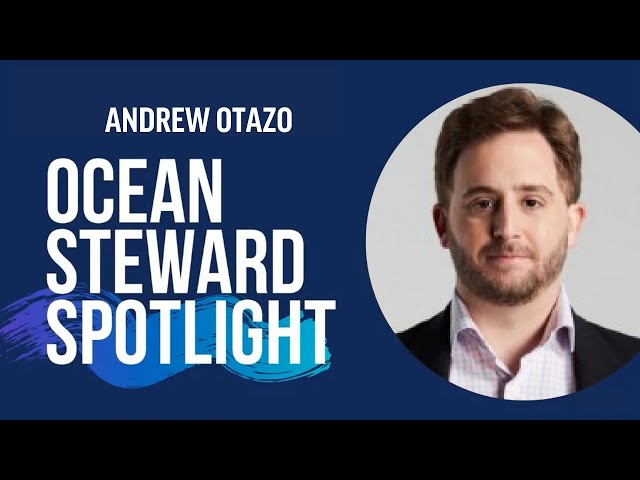
Andrew Otazo has spent the past four years removing over 14,500 pounds of trash from South Florida’s mangrove swamps and ocean. He currently works in public relations and frequently lectures on grassroots activism.
Previously, Otazo served as the Cuba Study Group’s Executive Director. Before that, he implemented U.S. foreign policy with Venezuela, Peru, Ecuador, Bolivia, and Colombia at the State Department.
His earlier career also includes working as Mexican President Felipe Calderón’s assistant.

Natalia Teryda, a PhD student at the University of Florida, has dedicated herself to marine conservation since age fourteen. She earned a Master's in Marine Biodiversity and Conservation from the Scripps Institution of Oceanography at UC San Diego as a Fulbright Grantee, following her BS in Biology from Universidad Nacional de Mar del Plata.
Originally from Mar del Plata, Argentina, Natalia was selected by the US Embassy in Argentina to be an Argentinean Youth Ambassador for the "Our Oceans, Young Ambassadors" program, organized by the US Department of State.

Shima Abadi is a Professor of Oceanography, Electrical and Computer Engineering, and Engineering and Mathematics at the University of Washington. Her research primarily focuses on ocean noise.
Her work encompasses sound source localization, acoustical imaging, and animal bioacoustics. An award recipient from the Acoustical Society of America, Dr. Abadi is currently developing algorithms for underwater network data analysis, mitigating seismic airgun noise, and analyzing ocean ambient noise.

Diana Pacin deGongora, a mechanical engineer, previously worked in the air conditioning and refrigeration industry during its transition from ozone-depleting refrigerants. Later, as a professor at Miami-Dade College, she contributed to the Earth Ethics Institute, which integrated Earth Literacy into the college's curriculum and operations.
Currently, Diana focuses on educating her community about the harms of single-use plastic. She collaborates with the South Florida Plastic Coalition, advocating for reduced single-use plastic use in her county.
Support Diana's efforts: plasticfreefl.org

Aaron McCall serves as EnviroVoters' Federal Advocacy Coordinator, focusing on building grassroots support for federal climate legislation and ensuring California's elected officials lead the way.
He began his activism in Orange County, chairing Indivisible OC 48 and continuing to advance local conservation and climate action. McCall was honored as the 2019 OC League of Conservation Voters Activist of the Year. Support Aaron here: https://envirovoters.org/

Nithya Narayanaswamy, an Environmental Justice Advocate and Emory University student, began her activism at age 14. She led a campaign against firecrackers during Diwali, highlighting their ecological harm and air pollution.
She previously served as President of her campus’s Climate Reality Chapter. Currently, Nithya is the Executive Director of the Plastic-Free Emory Project.
Support Nithya's work [here](https://plasticfreeemory.carrd.co/).
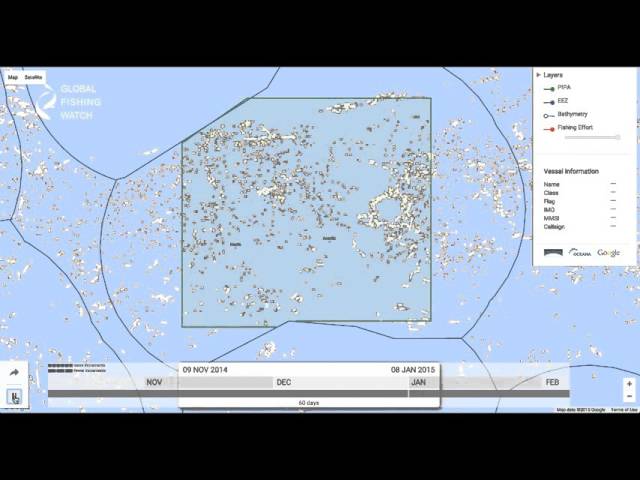
Oceana's report highlights Global Fishing Watch's (GFW) ability to monitor fishing activity in marine protected areas (MPAs) worldwide. GFW provides a clear view of how effectively policies control fishing in these vital zones.
A collaboration between SkyTruth, Oceana, and Google, GFW was used to document the success of the Phoenix Islands Protected Area (PIPA). After new regulations established PIPA as a no-take area, GFW detected a drastic reduction in fishing, demonstrating the policy's positive impact.


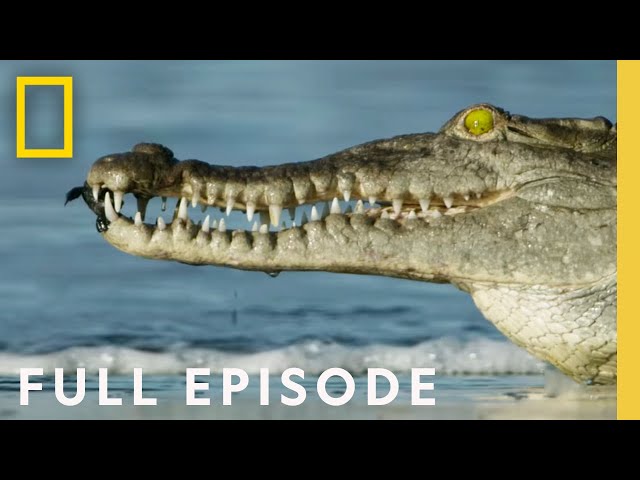
Dive into Earth’s oceans with *Hostile Planet*, a beautifully filmed series showcasing animals adapting to extreme environments. Hosted by survivalist Bear Grylls, the show reveals epic stories of survival on our fast-changing planet.
Watch the full season on Disney+, or stream other National Geographic content on Hulu, the NGTV app, or ABC app. Subscribe to Nat Geo on YouTube for more episodes and follow them on social media for updates.

A luxury boutique now offers fish infused with fashionable microplastic fibers from the hottest brands.
This stark reality is highlighted by Just One Ocean.

A new Oceana report reveals that the illegal seafood trade, partly fueled by U.S. demand, devastates fishing communities worldwide. Oceana advocates for expanded traceability and transparency requirements for all seafood imports.
Despite being the world's largest seafood importer, the U.S. Seafood Import Monitoring Program (SIMP) covers only 13 species, leaving 60% of imports vulnerable to illegal, unreported, and unregulated (IUU) fishing. This loophole allowed an estimated $2.4 billion in IUU seafood into the U.S. market in 2019, causing global economic and ecological damage.
Oceana urges President Biden to expand SIMP to include all imported seafood and implement comprehensive "net to plate" traceability to protect ocean health and livelihoods.


Oceana proudly celebrates its 20th anniversary this year. We are marking two decades of dedicated work protecting and restoring the world's oceans.
This milestone provides an opportunity to spotlight our significant conservation victories achieved globally, reflecting our unwavering commitment to marine life and healthy seas.

Environmental Scientist and Advocate
What EarthSayers stands for
Discover Diverse Voices on EarthSayers
Unlike algorithm-driven platforms that push you into a content bubble, we ensure you hear a variety of perspectives from scientists, activists, Indigenous leaders, business innovators, and everyday citizens working toward sustainability.
EarthSayers CINEMA
Watch, learn and lead—sustainability starts with you.
How to Live on Earth | Feature Documentary | Presented by Benedict Cumberbatch
What if the solutions to building a better future already exist? How to Live on Earth is an ambitious documentary that explores how humanity can create a thriving future by collaborating with nature. Presented by Benedict Cumberbatch, the film reveals the potential of teaming up with nature to address our greatest challenges.
Heartwarming and energizing, it offers a hopeful vision for a future where both nature and humanity can thrive. How to Live on Earth is produced by Open Planet Studios in association with Villars Institute Foundation and Silvania. Join the conversation by downloading film assets and sharing your reaction at howtoliveonearth.net/social-toolkit. Explore educational resources from the Villars Institute at YouTube.


