



Special Collections:
Farming and Food Production
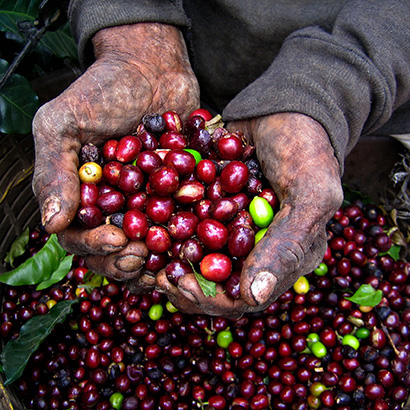

In the mountain village of Charrate, Nepal, young pastoralist Subita Rai returned home to create opportunities for her community. Alongside fellow livestock keepers, she established a community-based cheese-making enterprise using milk from chauri, a yak-cattle hybrid. With support from FAO, they improved processing facilities, enhancing efficiency and product quality while expanding market opportunities.
Stay connected with FAO: Subscribe on YouTube, and follow us on Facebook, Instagram, LinkedIn, TikTok, X, and Weibo.

The Agri-FIT project revolutionizes inclusive agriculture by removing barriers that exclude persons with disabilities from farming. This video showcases a specialized soilless farming system designed for wheelchair users and those with mobility impairments, featuring a plant-stem lifting mechanism that enables independent management of vertical crops like tomatoes and cucumbers.
Agri-FIT combines ergonomic design with environmental sustainability, optimizing water use and enhancing productivity. The project promotes autonomy and skill development, transforming agriculture into a field where physical limitations do not hinder the ability to create a sustainable livelihood.
Subscribe! YouTube | Follow FAO on Facebook, Instagram, LinkedIn, TikTok, X, Weibo
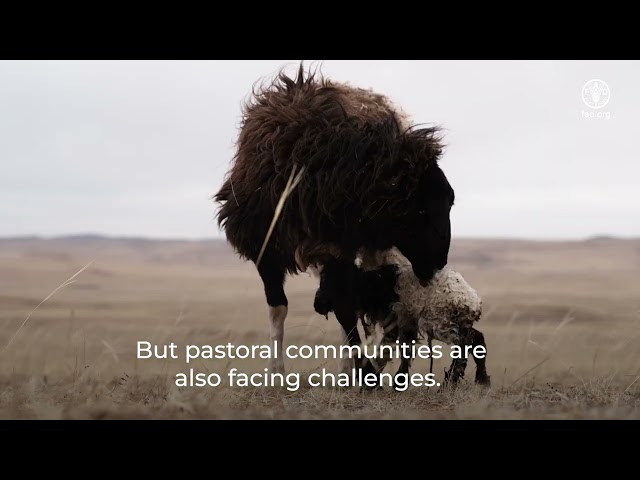
A study by the FAO and the Green-Gold Mongolia Rangeland Research Center reveals that Mongolia's pastoral systems support greater biodiversity compared to other livestock systems. It highlights that pastoralist women face challenges in accessing assets like livestock ownership, despite their significant contributions to household decisions and community leadership.
Conducted across five districts in two ecological zones, the research involved surveys from 424 households, focus group discussions, and in-depth interviews. Key themes included mobility patterns, biodiversity perceptions, workload distribution, women's empowerment, youth employment, and income perceptions. The study advocates for enhanced support for pastoral systems and pastoralist women.
Learn more at FAO.

From 2021 to 2025, the Commission for the Fight Against Desert Locusts in the Western Region (CLCPRO), supported by the French Development Agency (AFD), implemented the project GCP/GLO/096/FRA. This initiative aimed to strengthen preventive control strategies and enhance operational research on desert locusts in the Western Region.
The project improved locust surveillance systems by introducing new technologies, including drones and AI for plant identification. It also developed a regional model for predicting locust risk, promoted environmentally friendly control methods using the biopesticide Metarhizium acridum, and strengthened interregional cooperation and human capacity among the eleven CLCPRO member countries. More information can be found at FAO CLCPRO.

El cambio climático afecta a millones en el Corredor Seco Centroamericano y zonas áridas de la República Dominicana. El BCIE, la FAO y la CCAD, con apoyo del Fondo Verde para el Clima y los Gobiernos de la región, implementan el Programa Regional ADAPTA-R.
Con una inversión de más de USD 268 millones, esta iniciativa fortalecerá la resiliencia climática de más de un millón de personas a través de agricultura sostenible, gestión eficiente del agua y restauración de cuencas. Se vinculará asistencia técnica con mecanismos financieros para productores y MIPYMEs rurales, promoviendo una región SICA más resiliente y sostenible.
The Food and Agriculture Organization of the United Nations (FAO) urges agrifood investment stakeholders to transform Eastern Africa's agrifood opportunities into viable investments and real development outcomes. This call follows the Hand-in-Hand Investment Forum held in Kigali, Rwanda.
Stay connected with FAO on social media: Facebook, Instagram, LinkedIn, TikTok, X, and Weibo. For more information, visit FAO.

This video highlights FAO's efforts in transforming agrifood systems and improving livelihoods in Zimbabwe from 2022 to 2026, guided by the Country Programming Framework (CPF) and aligned with the FAO Strategic Framework. It showcases initiatives in climate-smart agriculture, nutrition gardens, market linkages, livestock health, and digital innovation, promoting Better Production, Better Nutrition, a Better Environment, and a Better Life.
Through partnerships with the Government of Zimbabwe and local communities, FAO supports farmers in adapting to climate change and enhancing agrifood systems. Follow FAO on social media: Facebook, Instagram, LinkedIn, TikTok, X, Weibo. © FAO: fao.org #SDGs #Agenda2030 #GlobalGoals

Este video muestra cómo las comunidades de Uriondo, Tarija, trabajan para recuperar suelos degradados y proteger el agua vital para la producción y la vida. A través de cerramientos y acciones de restauración, se conservan las microcuencas, mientras que la producción agroecológica ofrece nuevas oportunidades para las familias. Este proceso también refuerza el Sistema Participativo de Garantía (SPG), que certifica a los productores agroecológicos y promueve prácticas basadas en suelos saludables.
Con el apoyo de la FAO, los productores y comunidades demuestran que recuperar la fertilidad de la tierra, reducir el uso de químicos y proteger las fuentes de agua son esenciales para sistemas productivos más sostenibles. Más información en FAO Bolivia.

The FAO One Country One Priority Product (OCOP) Initiative has empowered countries over the past five years by enhancing their unique agricultural products. This initiative has strengthened value chains, expanded market opportunities, and benefited farmers, women, and youth. From five initial demonstration countries, OCOP has evolved into a global movement involving 94 countries and promoting 56 Special Agricultural Products.
With over 100,000 farmers, extension workers, and value-chain actors trained, OCOP is driving innovation and sustainable agrifood systems worldwide, from Bangladesh and Egypt to Peru, Ghana, and Georgia. Learn more about this impactful initiative at FAO.

Dans l'est du Tchad, l'insécurité alimentaire aiguë affecte des milliers de ménages, menaçant leur capacité à satisfaire leurs besoins vitaux. La FAO, avec le Fonds humanitaire pour l'Afrique de l'Ouest et centrale, aide 12 200 ménages vulnérables. Saadia, l'une des bénéficiaires, a reçu des semences et un transfert monétaire inconditionnel, lui permettant de relancer son activité agricole.
Cette assistance lui permet de répondre aux besoins immédiats de sa famille tout en cultivant son champ, renforçant ainsi l'autonomie alimentaire de son ménage pour les mois à venir.
Subscribe! YouTube | Follow FAO: Facebook, Instagram, LinkedIn, TikTok, X, Weibo

Discover how to say "International Year of Rangelands and Pastoralists" in your language. This video showcases the diversity and unity of those dedicated to rangelands and pastoralist communities, emphasizing their crucial role in supporting livelihoods, biodiversity, food security, and healthy ecosystems.
Join the celebration of the cultural heritage and global community behind #IYRP2026. Learn more about the initiative at FAO. Subscribe to our channel here and follow us on social media: Facebook, Instagram, LinkedIn, TikTok, X, and Weibo.

The FAO AGRIS Seal of Recognition honors institutions that enhance the FAO AGRIS Network by sharing research metadata, making agricultural knowledge more visible and accessible globally. This Seal acknowledges the commitment of data providers to open access and knowledge sharing.
By contributing to FAO AGRIS, institutions connect with a worldwide community of researchers, practitioners, and policymakers. Displaying the Seal on their websites showcases their role in fostering a more interconnected agricultural knowledge ecosystem.
Learn more at www.fao.org/agris. Subscribe to our channel here and follow us on Facebook, Instagram, LinkedIn, TikTok, X, and Weibo.

Do you use AGROVOC in your research or digital platforms? The “Proudly using AGROVOC” icon allows organizations to showcase their connection to AGROVOC, the FAO's multilingual thesaurus for agriculture. This resource helps organize information and enhances the discoverability of agricultural knowledge across languages and disciplines.
By displaying the icon on your website, publications, or social media, you contribute to a more open and interoperable agricultural knowledge environment. Learn more about AGROVOC at www.fao.org/agrovoc. Follow FAO on social media: Facebook, Instagram, LinkedIn, TikTok, X, Weibo.

The Hand-in-Hand Initiative aims to transform agrifood systems by eradicating poverty, ending hunger, and reducing inequalities. Utilizing geospatial analytics and economic modeling, it identifies key areas for impactful investment.
By aligning country priorities with investment opportunities, the Initiative involves countries, the FAO, international financial institutions, and private investors. The annual Hand-in-Hand Investment Forum facilitates partnerships and financing to implement these national priorities. In this video, Eurydice Deedi Olga Sogbohossou discusses targeted investment sectors in Benin and their potential benefits for farmers and rural communities.
Subscribe to the FAO on YouTube: FAO Channel. Follow FAO on social media: Facebook, Instagram, LinkedIn, TikTok, X, Weibo.

The Hand-in-Hand (HIH) Initiative aims to transform agrifood systems by eradicating poverty (SDG1), ending hunger (SDG2), and reducing inequalities (SDG10). It utilizes geospatial analytics and economic modeling to identify key areas for impactful investment.
The Initiative aligns country priorities with investment opportunities by collaborating with international financial institutions and private investors. The annual Hand-in-Hand Investment Forum serves as a platform for countries to showcase investment opportunities and foster partnerships. In this video, Edith Paredes from the Amazon Cooperation Treaty Organization discusses targeted investment sectors and their potential benefits for farmers and rural communities.
Subscribe to FAO on YouTube: FAOoftheUN. Follow FAO on social media: Facebook, Instagram, LinkedIn, TikTok, X, Weibo.

This video showcases the FAO project aimed at enhancing food security and resilience for host communities and Syrian refugees in Jordan. Funded by the Government of Italy, the project operates in Ajloun, Jerash, and Balqa governorates, focusing on strengthening livelihoods and agricultural production through beneficiary testimonies and field footage.
It highlights sustainable practices, technology transfer, and water management solutions that boost productivity and income for vulnerable communities. Featuring stories from farmers and local institutions, the video illustrates how inclusive agrifood systems can create opportunities and contribute to sustainable rural development.

The FAO Regional Office for the Near East and North Africa participated in the second edition of Seeds to Foods 2026 in Rome from October 8 to 12. The NENA Region Pavilion highlighted the region's agricultural heritage through food tastings, cultural performances, cooking demonstrations, and interactive activities, celebrating its diversity and the communities behind its culinary traditions.
Stay connected with FAO: Subscribe on YouTube. Follow us on Facebook, Instagram, LinkedIn, TikTok, X, and Weibo. © FAO: fao.org #SDGs #Agenda2030 #GlobalGoals
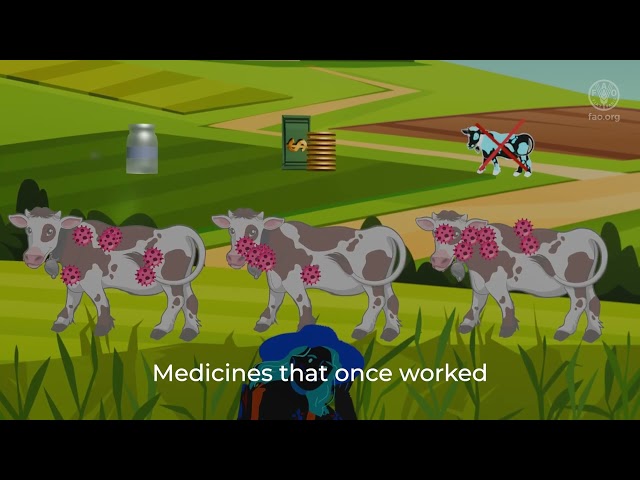
This short video aims to raise awareness about antimicrobial resistance (AMR) among livestock farmers. It features contributions from Dóra Kovács and Daniel Beltran-Alcrudo for the script, with production by György Argyelán. The audio narration was created using TTSMaker.
For more resources, visit the FAO Animal Health page and the FAO Antimicrobial Resistance page. Subscribe to the FAO YouTube channel and follow FAO on Facebook, Instagram, LinkedIn, TikTok, X, and Weibo.

The Hand-in-Hand Initiative aims to transform agrifood systems by eradicating poverty, ending hunger, and reducing inequalities. Utilizing geospatial analytics and economic modeling, it identifies key areas for impactful investments.
This initiative aligns country priorities with investment opportunities by collaborating with international financial institutions and private investors. The annual Hand-in-Hand Investment Forum serves as a platform for countries to showcase investment opportunities and foster partnerships.
In this video, Syed Tauqir Hussain, Advisor to the Prime Minister of Pakistan, discusses targeted investment sectors and their potential benefits for farmers and rural communities. Subscribe to the FAO YouTube channel here.

The Hand-in-Hand Initiative aims to transform agrifood systems by eradicating poverty, ending hunger, and reducing inequalities. Utilizing geospatial analytics and economic modeling, it identifies key areas for impactful investment.
By aligning country priorities with investment opportunities, the Initiative engages various stakeholders: countries set priorities, FAO offers data and expertise, international financial institutions facilitate investments, and private investors provide capital. The annual Hand-in-Hand Investment Forum serves as a platform for countries to showcase investment opportunities and foster partnerships.
In this video, H.E. Roza Mbilizi, Malawi's Minister of Agriculture, discusses targeted investment sectors and their potential benefits for farmers and rural communities. Subscribe to the FAO channel here.
Environmental Scientist and Advocate

